Sunday
- Morning snack
- Banana and warm milk
- Lunch
- Dal-bhat, spinach saag and pumpkin tarkari
- Afternoon snack
- Suji haluwa
From the hello at the door to the wave at the gate: the rhythm of the day, what we eat, and how we keep every child safe.
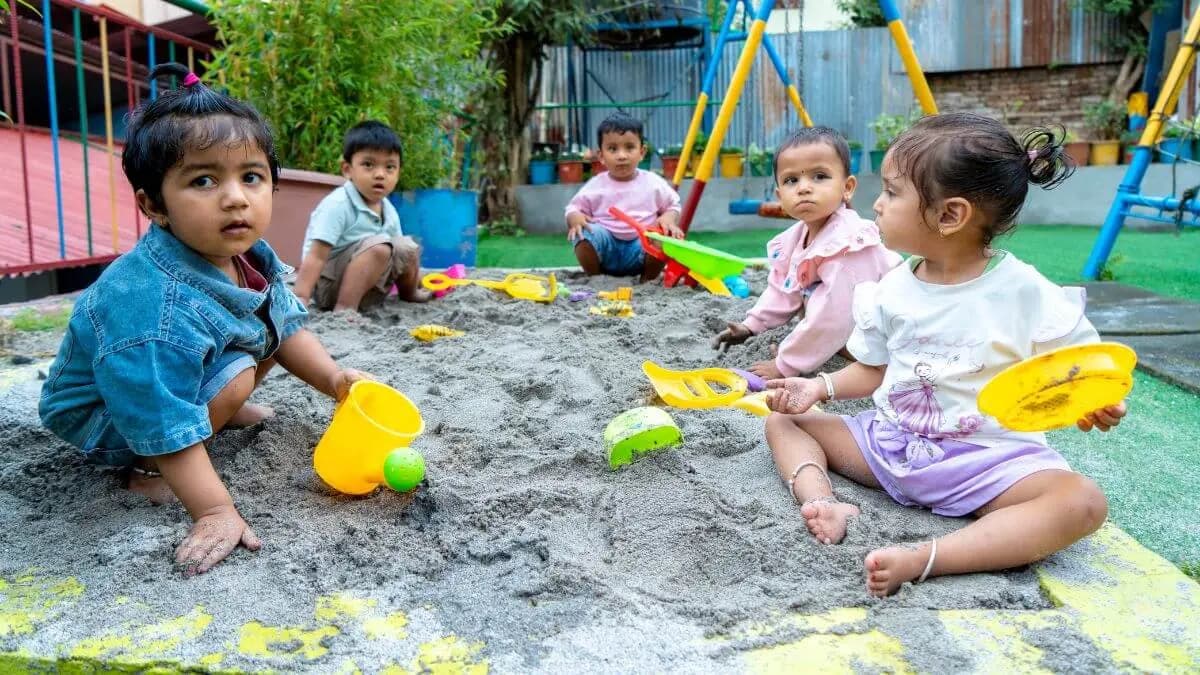
A calm day with a rhythm children can feel. Younger and older children follow different days, so pick a tab.
Hello at the door
Shoes off, bag on the hook, a hug goodbye. Your child lets go of your hand when they are ready — we never rush it.
Morning circle
A song, a greeting in English and Nepali, and who is here today.
Work time
Pouring, stacking, threading and puzzles, with a teacher sitting close by.
Fruit and garden play
Seasonal fruit, then sand, water and the slide in our garden.
Lunch together
A hot, home-cooked meal at small tables. Playgroup goes home at 12:30.
Rest, stories and songs
Nursery children nap or rest, then stories and music until home time at 3:00.
Arrival and circle
Children hang up their own bags, change into indoor shoes and join the circle: news, today’s date in Bikram Sambat, a song.
The long work period
Two and a half unbroken hours to choose work — letters, beads, maps — and stay with it. Snack waits on a side table; children eat when they are hungry.
Outdoors
Running, climbing, and a turn at watering the vegetable patch.
Lunch
Children lay the table, serve themselves and wash their own plates.
Afternoon together
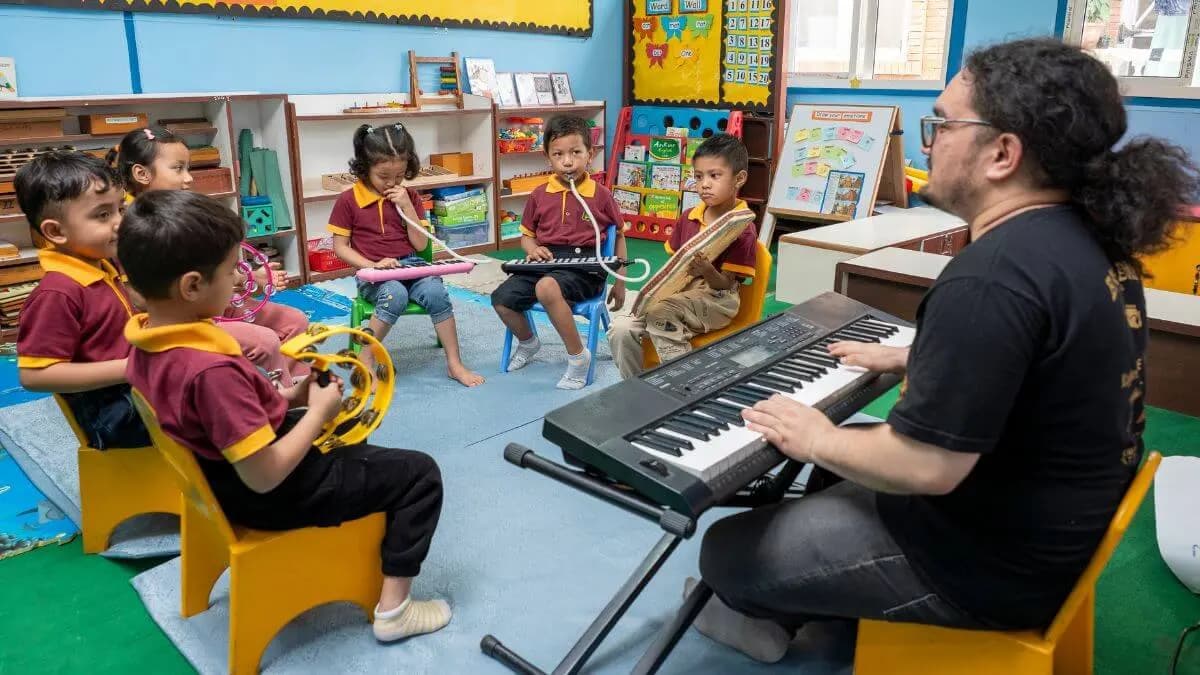
Stories, music with the madal, art, yoga or a Nepali lesson — something different each day.
Home time — or day care
Parents collect at the gate. Day-care children stay on for a rest, a snack and garden play until 5:00.
Times are a guide, not a bell. Early drop-off from 8:30 AM; day care until 5:00 PM.
Independence is built a little at a time, every day. These are the jobs children take on first — and the ones parents notice at home.
A named hook at child height, and the first job of every morning.
From a small glass jug, into a real glass. Spills are wiped with a cloth kept just for that.
Taking as much as they will eat, then scraping and stacking the plate afterwards.
Back on the shelf, in the same place, ready for the next child.
The Montessori jacket flip, and a little patience from the adults.
The food you would cook at home, in portions for small people. This is the autumn menu; it changes with the season.
What every parent asks first, answered before you have to ask.
CCTV in every room
Cameras in every classroom and the garden, recorded for thirty days. Ask at the office and we will show you your child’s room live.
Safe pick-up
Children go home only with the adults on their pick-up card. Someone new collecting? Call us first, and they bring ID.
First aid and a sick bay
Teachers trained in paediatric first aid, a quiet sick bay, and a call to you within minutes if your child is unwell.
Clean, every day
Toilets cleaned after every break, toys washed weekly, and hands washed before every meal — at sinks low enough to do it themselves.
One gate, always staffed
Visitors signed in, the gate staffed from 8:30 to 5:00, and the garden fenced on every side.
Gentle personal care
Toileting help and nappy changes by our didis — women caregivers trained for the youngest children — always with the door ajar.
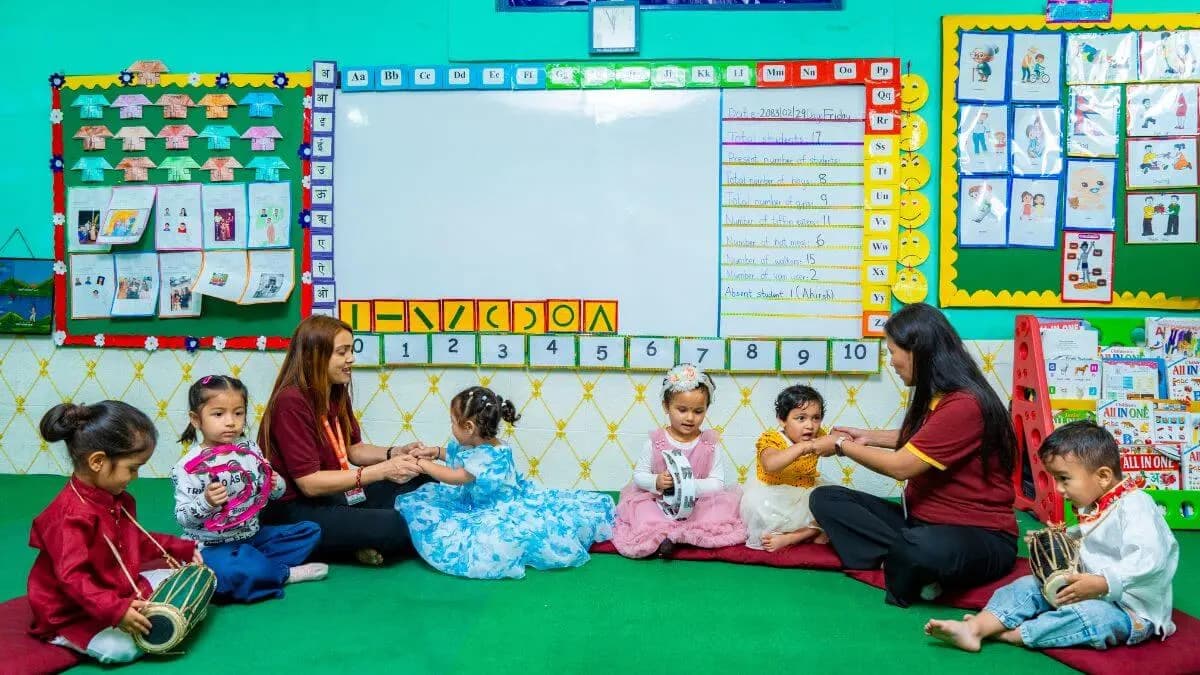
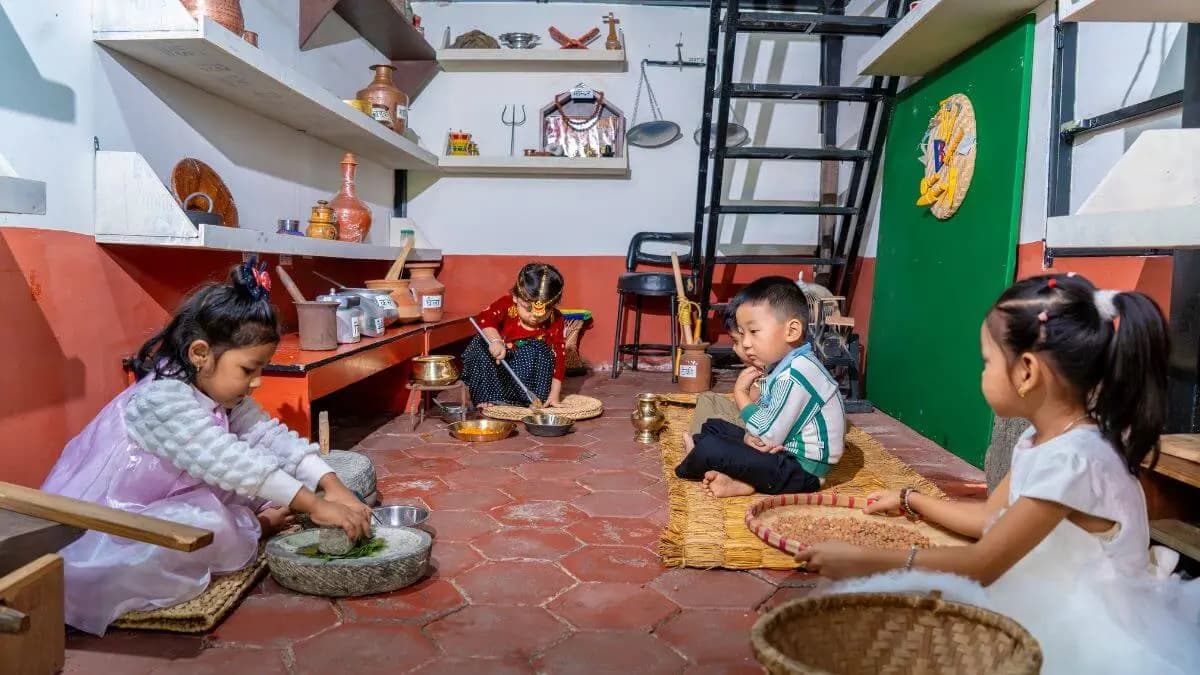
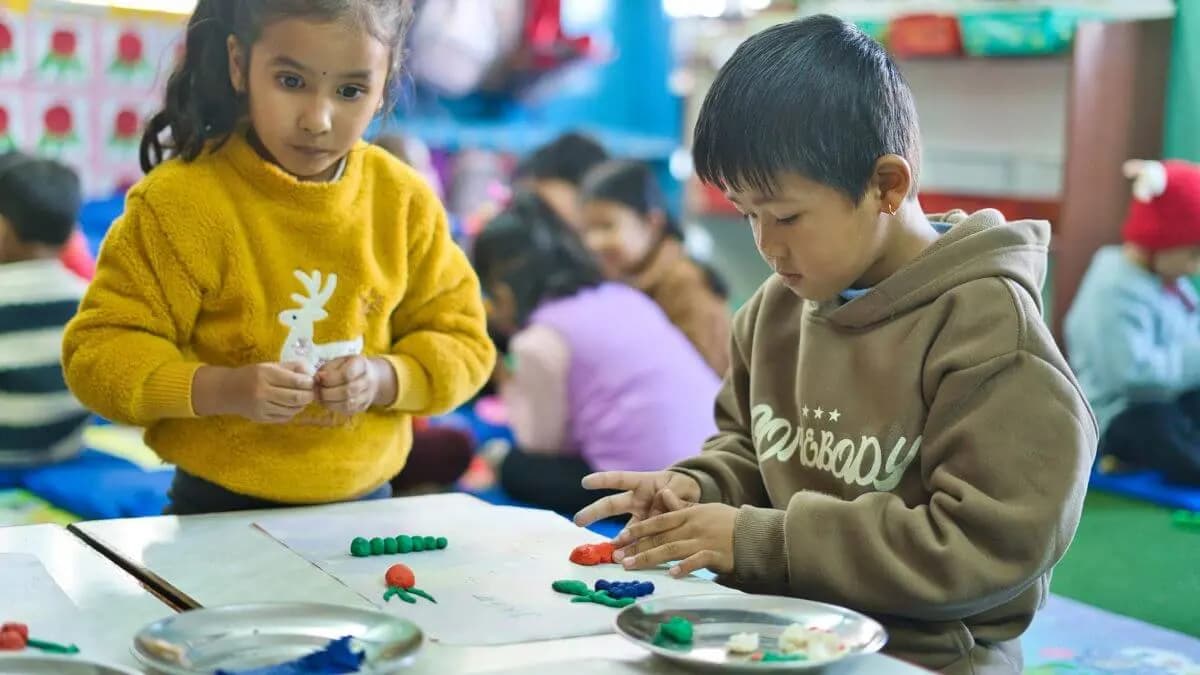
The best way to judge a preschool is to watch it at work. Book a visit and bring your child.
Prefer to write first? +977 1 661 2071 · [email protected]