Follow the child
We watch what each child is drawn to and prepare the next step before they reach for it. No two children in the room are doing the same thing at once — and that is the point.
Real materials, a room made for small people, and teachers who watch before they teach. Here is what that means for your child.
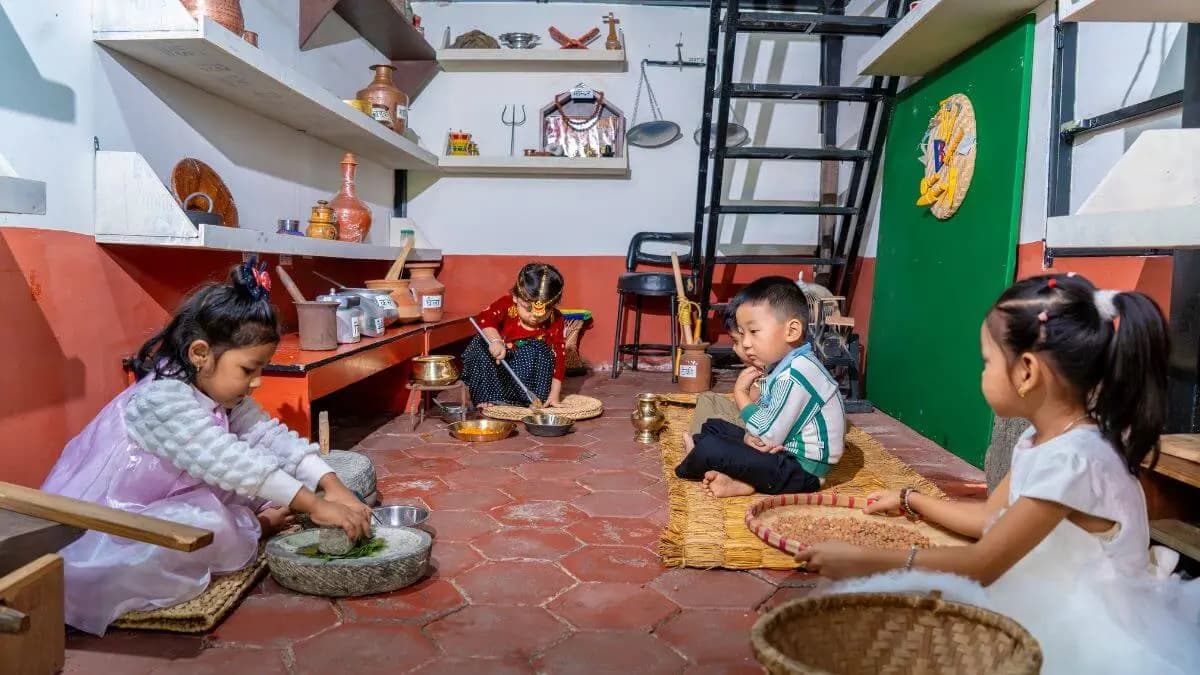
Dr Maria Montessori opened her first Casa dei Bambini in Rome in 1907. More than a century on, the idea holds: children learn best by doing, in a room made for them, at their own pace.
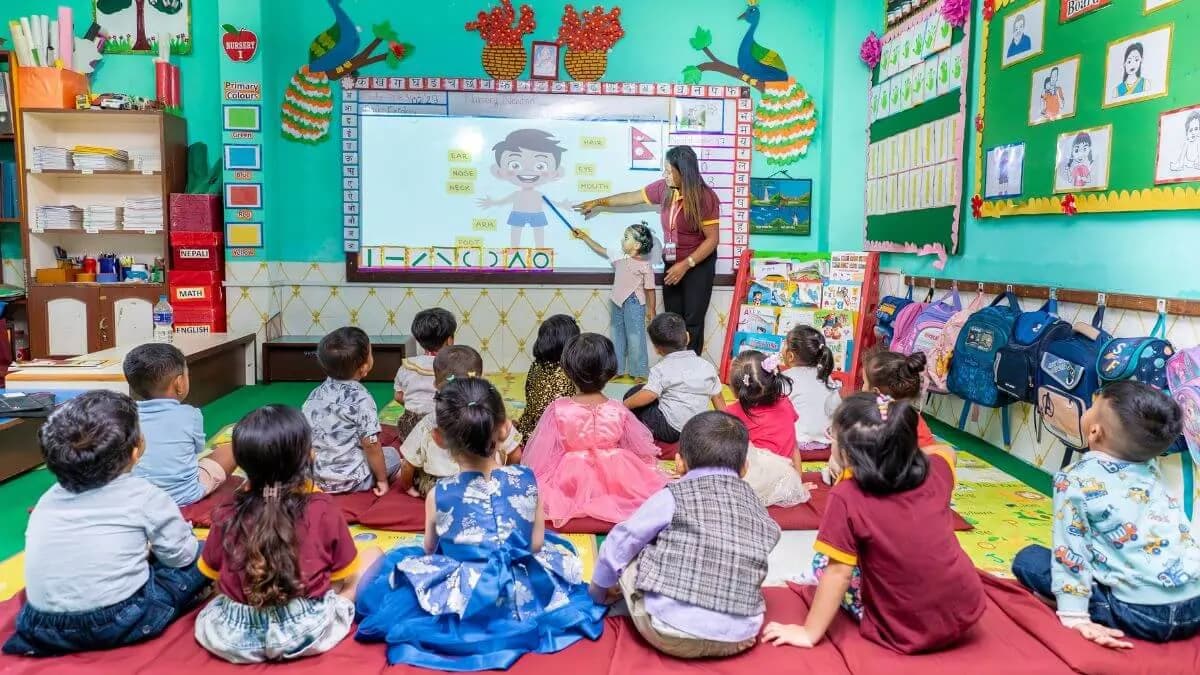
The greatest sign of success for a teacher… is to be able to say, “The children are now working as if I did not exist.”
We watch what each child is drawn to and prepare the next step before they reach for it. No two children in the room are doing the same thing at once — and that is the point.
Pouring, buttoning, tracing sandpaper letters. Every material is real, child-sized and made to be handled, because young children think with their hands.
Low shelves, real glass and a place for everything. The room does half the teaching: children always know where the work is, and where it goes back.
Children choose their work and how long to stay with it, inside a few clear rules — we walk, we use quiet voices, we put things back. Independence and kindness grow together.
Each area has its own shelves and its own materials, arranged from simple to hard, left to right. Children move between them freely — and a teacher notices where each one lingers.
Pouring water, sweeping, buttoning, folding a napkin, watering the tulsi. Everyday tasks that build concentration, a steady hand and the pride of “I did it myself.”
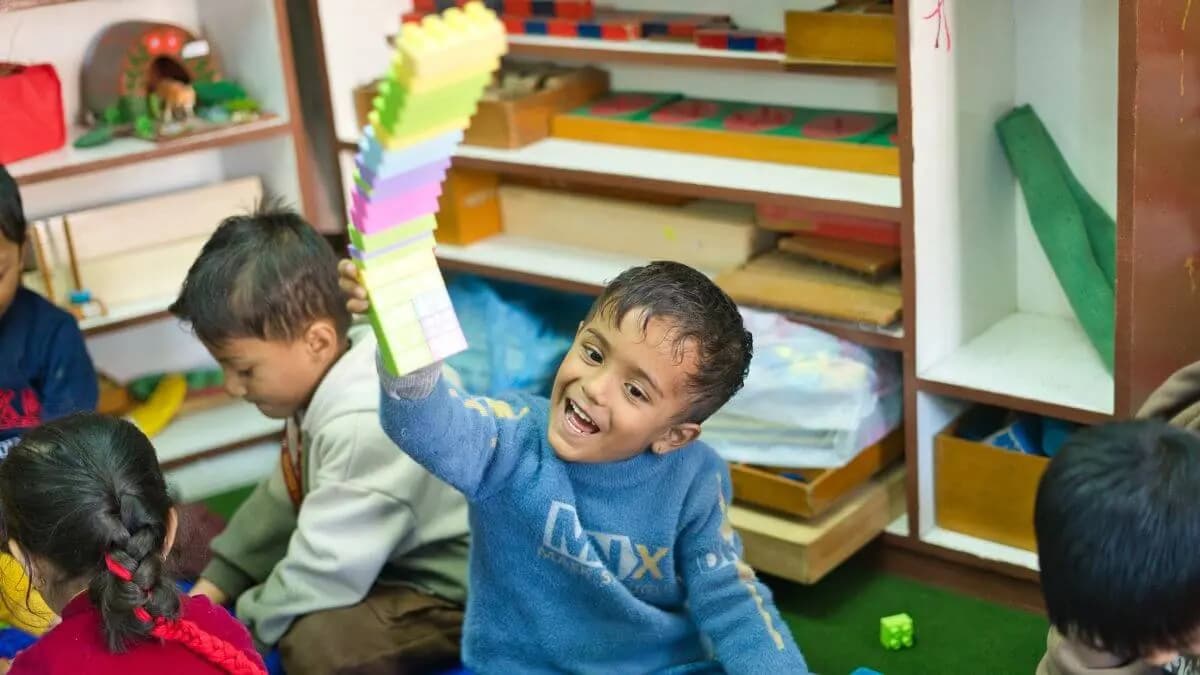
The Pink Tower, the Brown Stair, colour tablets and sound cylinders sharpen each sense — and give children words for what they notice: bigger, rougher, louder, the same.
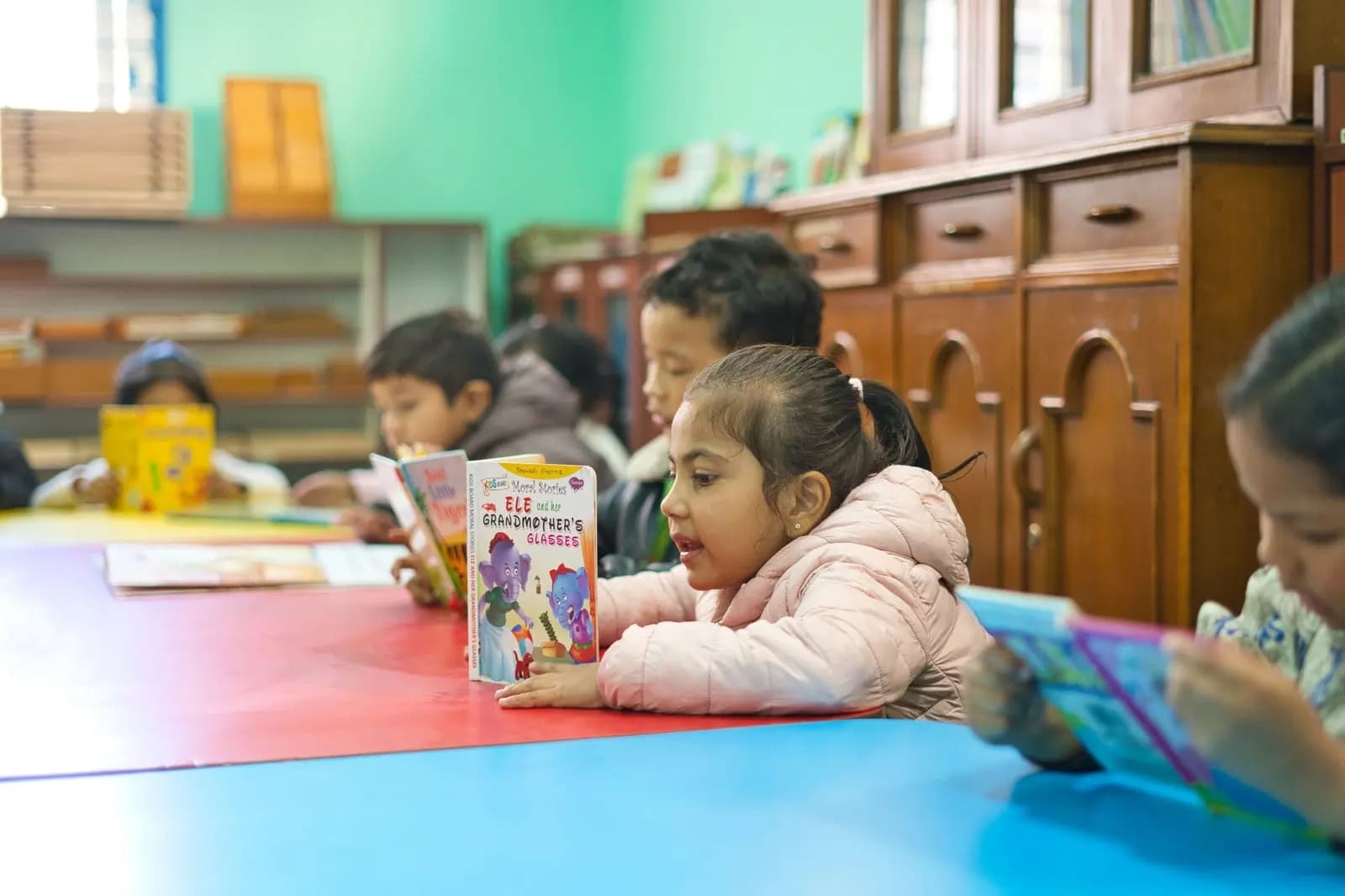
Children trace sandpaper letters with two fingers while saying the sound, then build words with the moveable alphabet — often before they can hold a pencil. In Nepali too: अ for अनार, क for कमल.
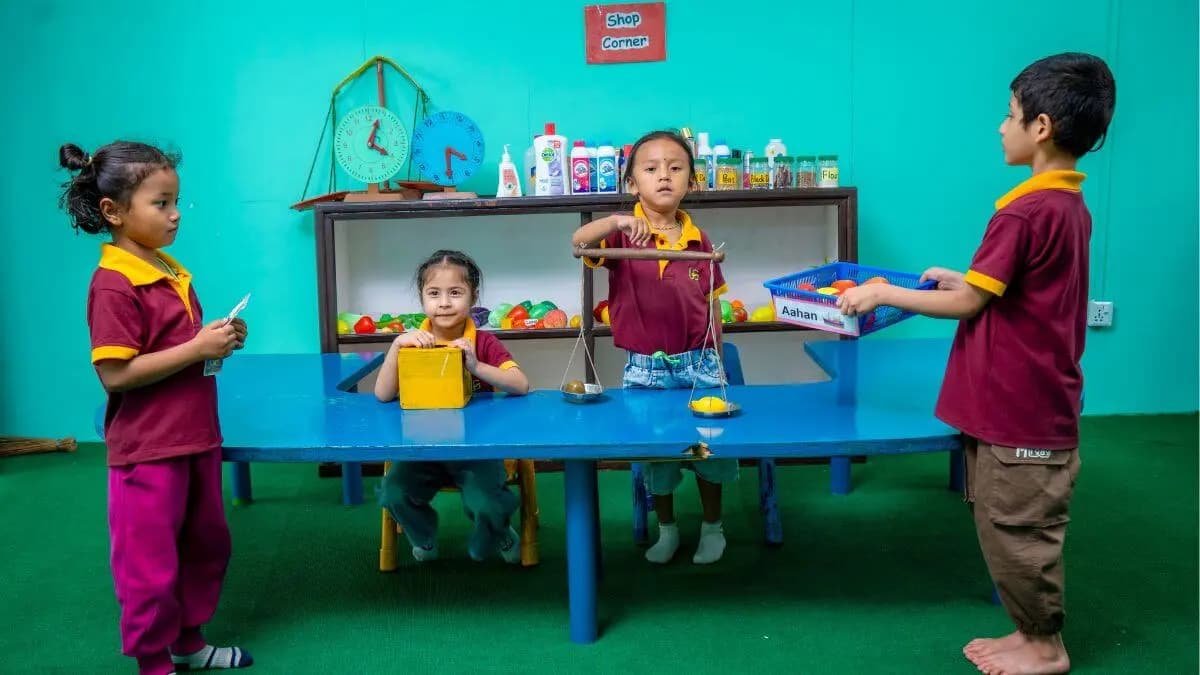
Quantity first, symbol second. A child holds “ten” as a bar of ten beads before writing it, and carries a thousand-cube across the room before meeting the word.
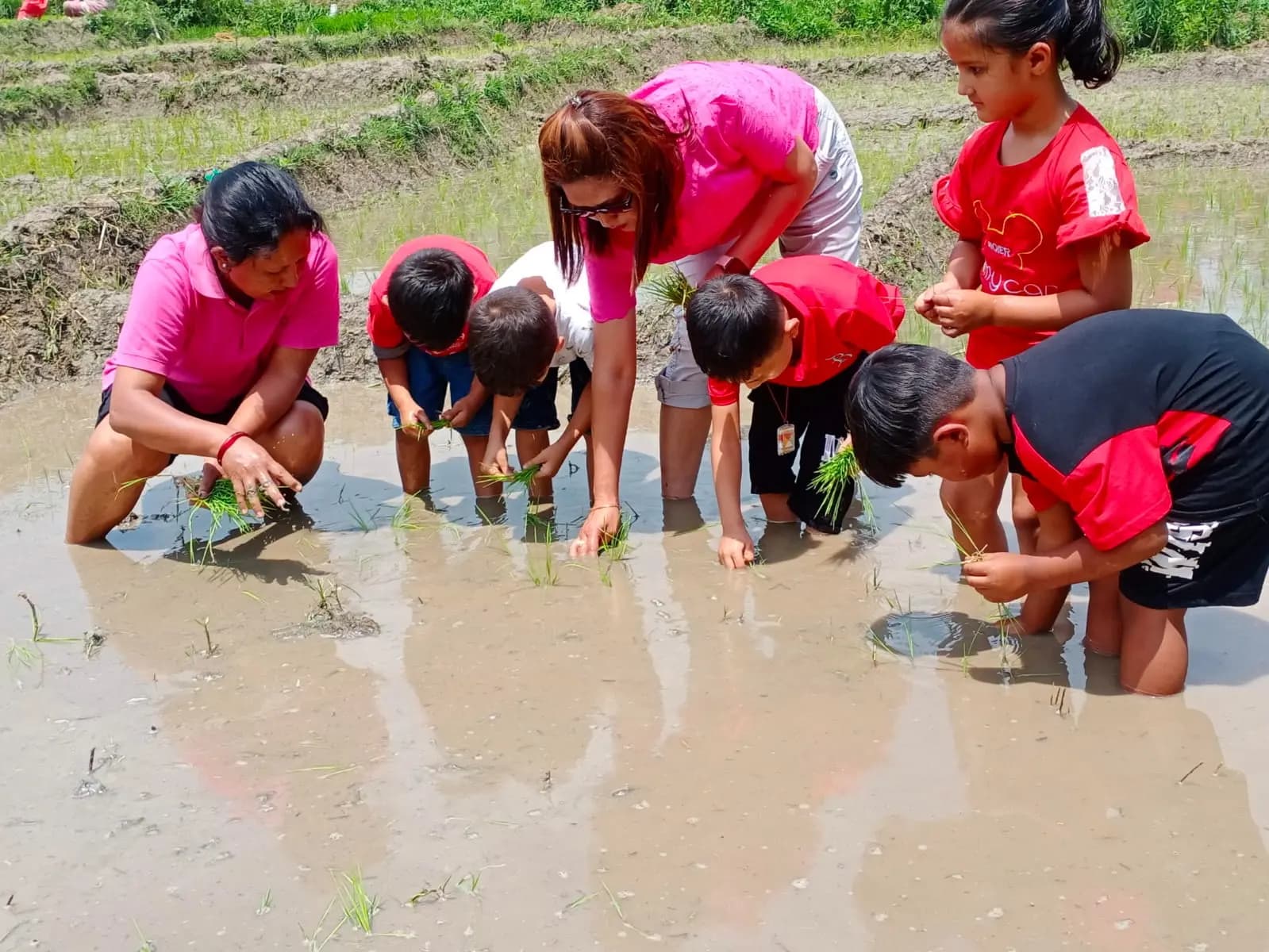
The world, starting from Nepal: puzzle maps, the seasons and our festivals, seeds in the garden and the life cycle of a butterfly. Art and music live here too.
Tap a number to see what happens in each corner. Better still, come and see it on a school morning.
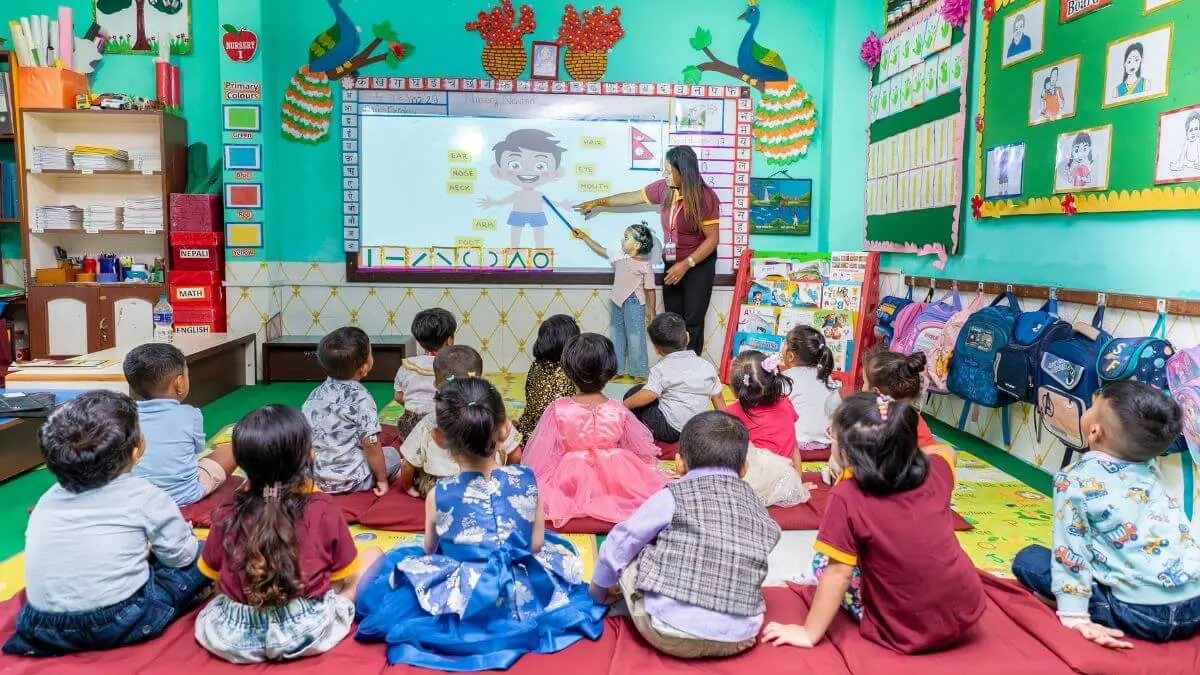
Folders, crayons and trays at a child’s own height — they take what they need and put it back.
LKG and UKG share one big room, as a Montessori classroom should. Older children teach what they have just mastered — the surest way to master it — and younger ones watch, and want to try.
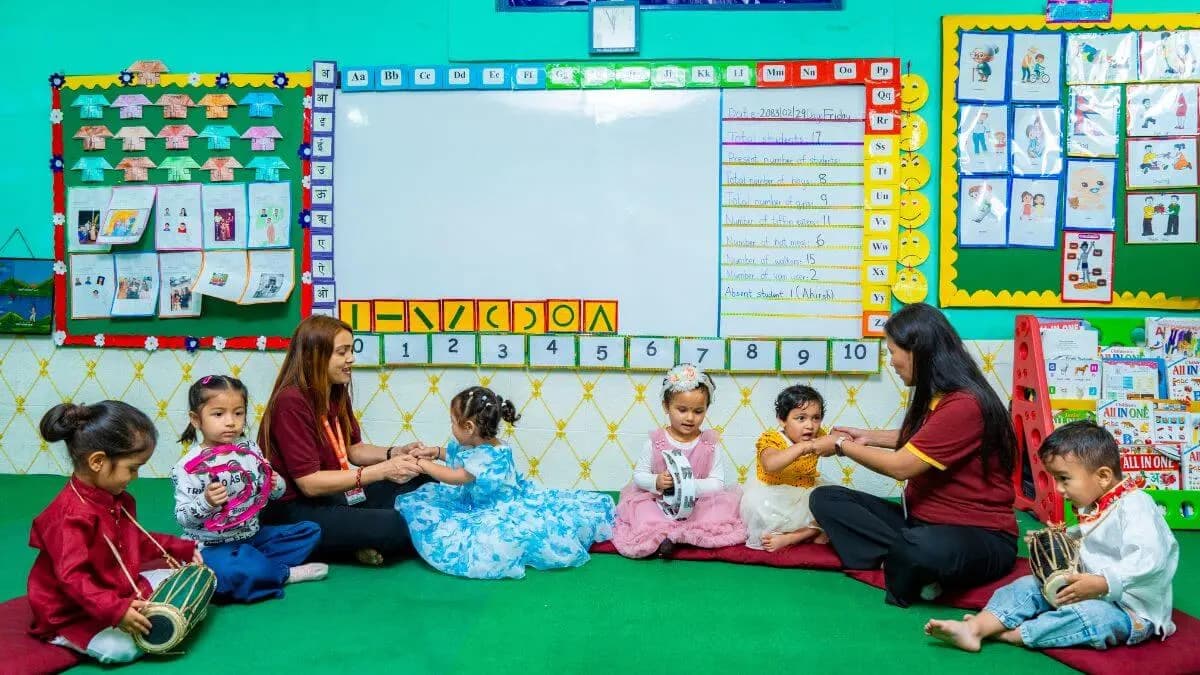
Low shelves, child-sized chairs, real glass jugs and small brooms. Everything has a place, and every material teaches one thing. Children do not need an adult to reach, fetch or tidy — so they don’t.
In a Montessori room the teacher is a guide: she watches, notices what each child is ready for, shows a material once, clearly — and steps back. Every lead teacher here holds a Montessori certificate and trains again every year.
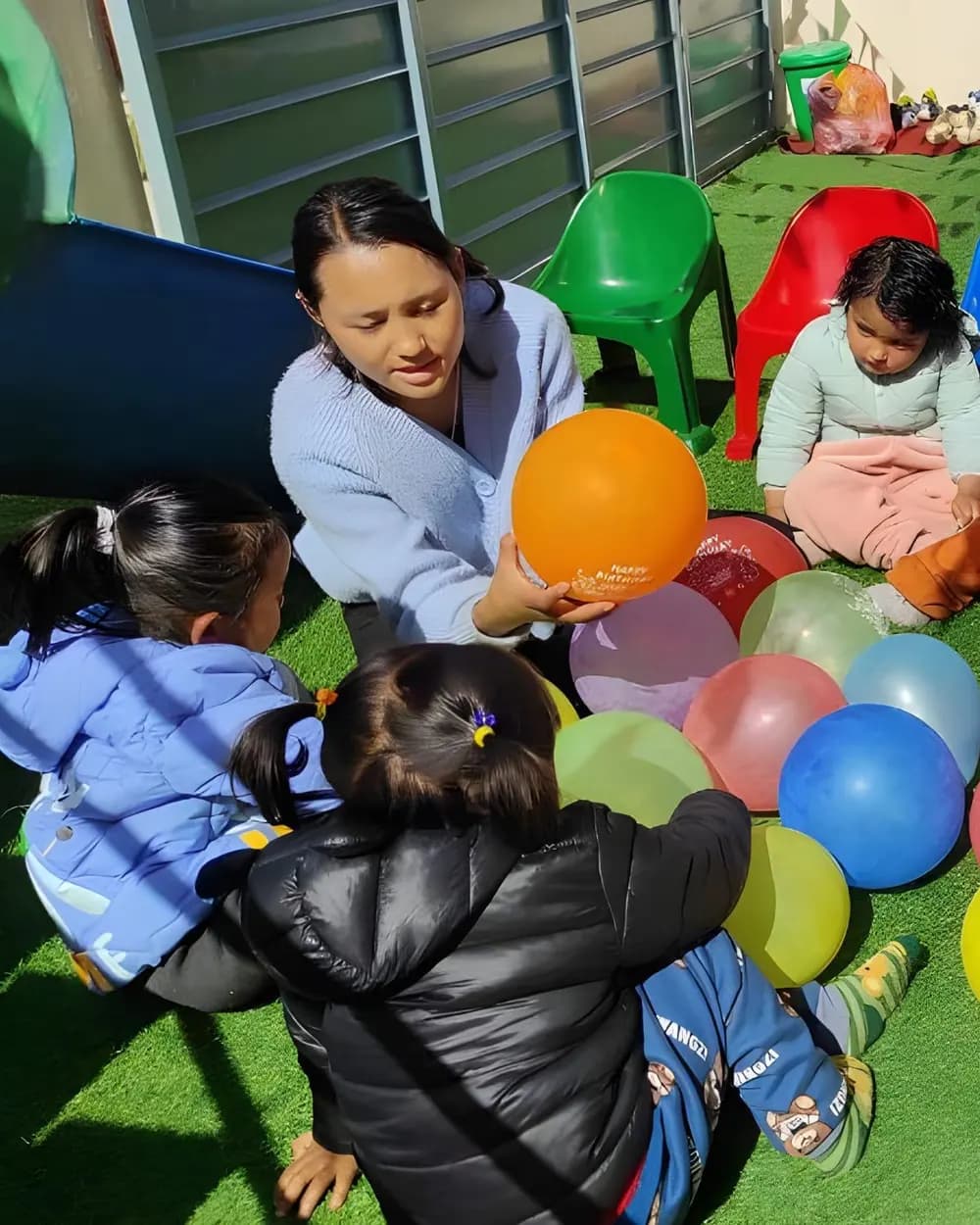
English is the language of the classroom; Nepali lives in the songs, rhymes, stories and the वर्णमाला beside the alphabet. Children who hear both from the start move between them without effort — A for apple, अ for अनार.
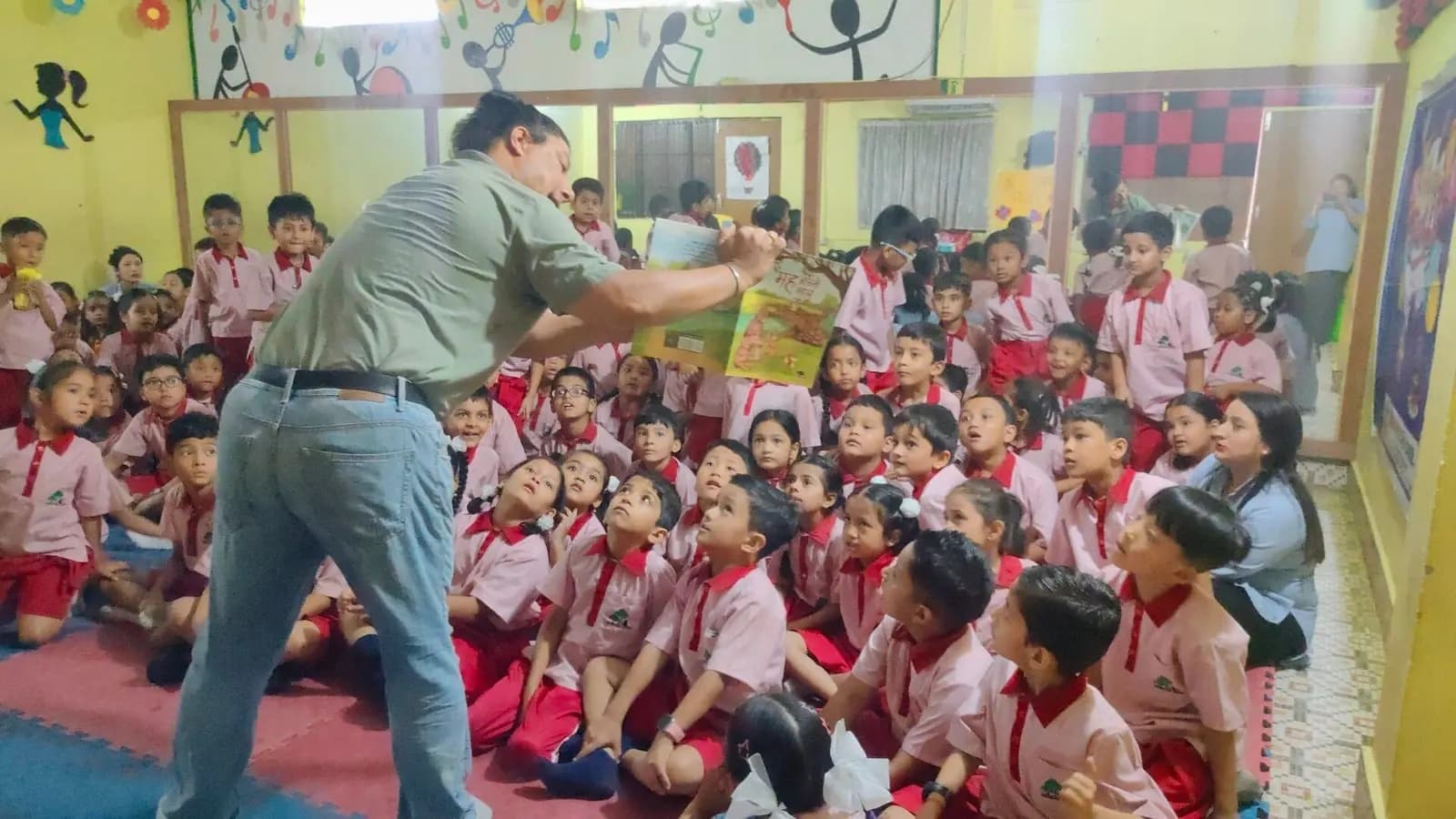
A Montessori classroom is easier to see than to describe. Come on a school morning and watch a work period.
Prefer to write first? +977 1 661 2071 · [email protected]