Admissions open · Session 2084

A first school where children learn to

  • do it themselves
  • count and read
  • care for others
  • love learning

A Montessori preschool in Suryabinayak, Bhaktapur for children from 18 months to 6 years — small classes, trained teachers, a hot home-style lunch and a day built around your child’s own curiosity.

18 months – 6 years
Playgroup to UKG
9:15 – 3:00
Sunday to Friday
1 : 6
Ratio for under-threes
Till 5 PM
Day care for working parents
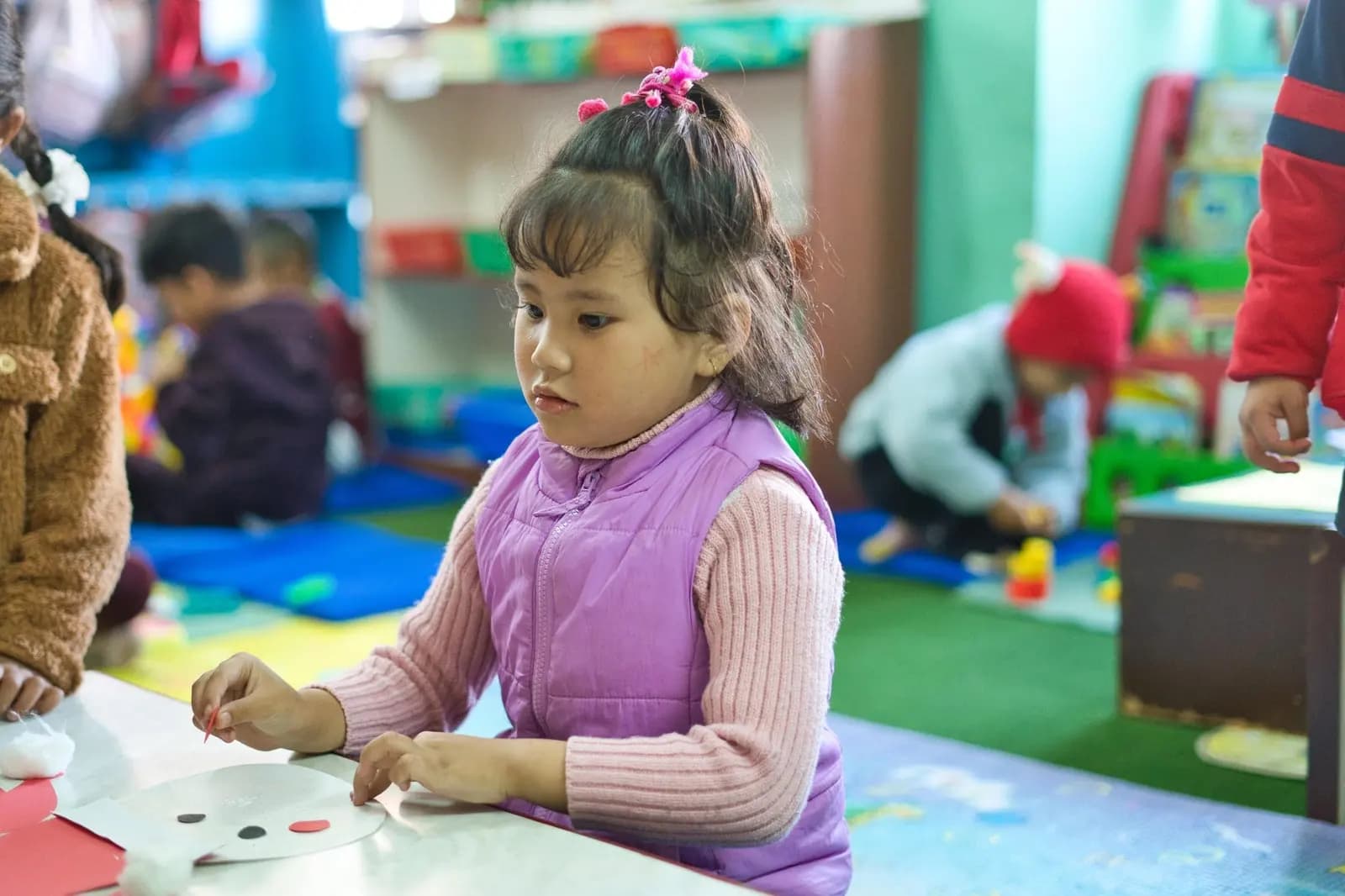
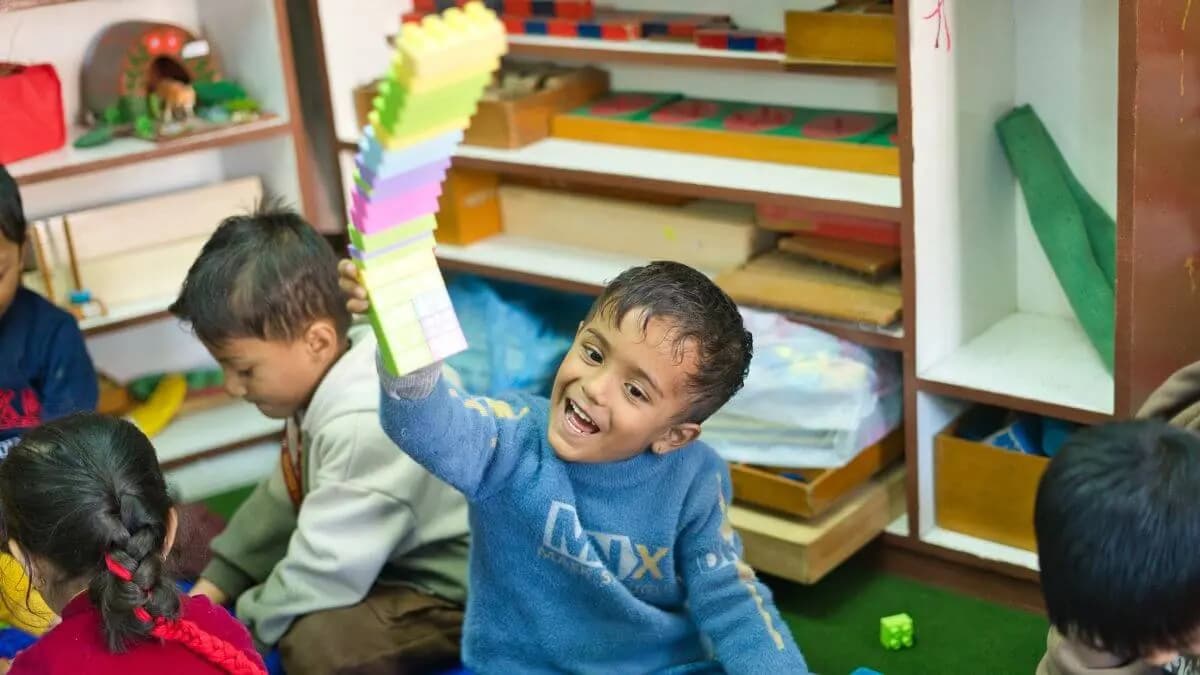
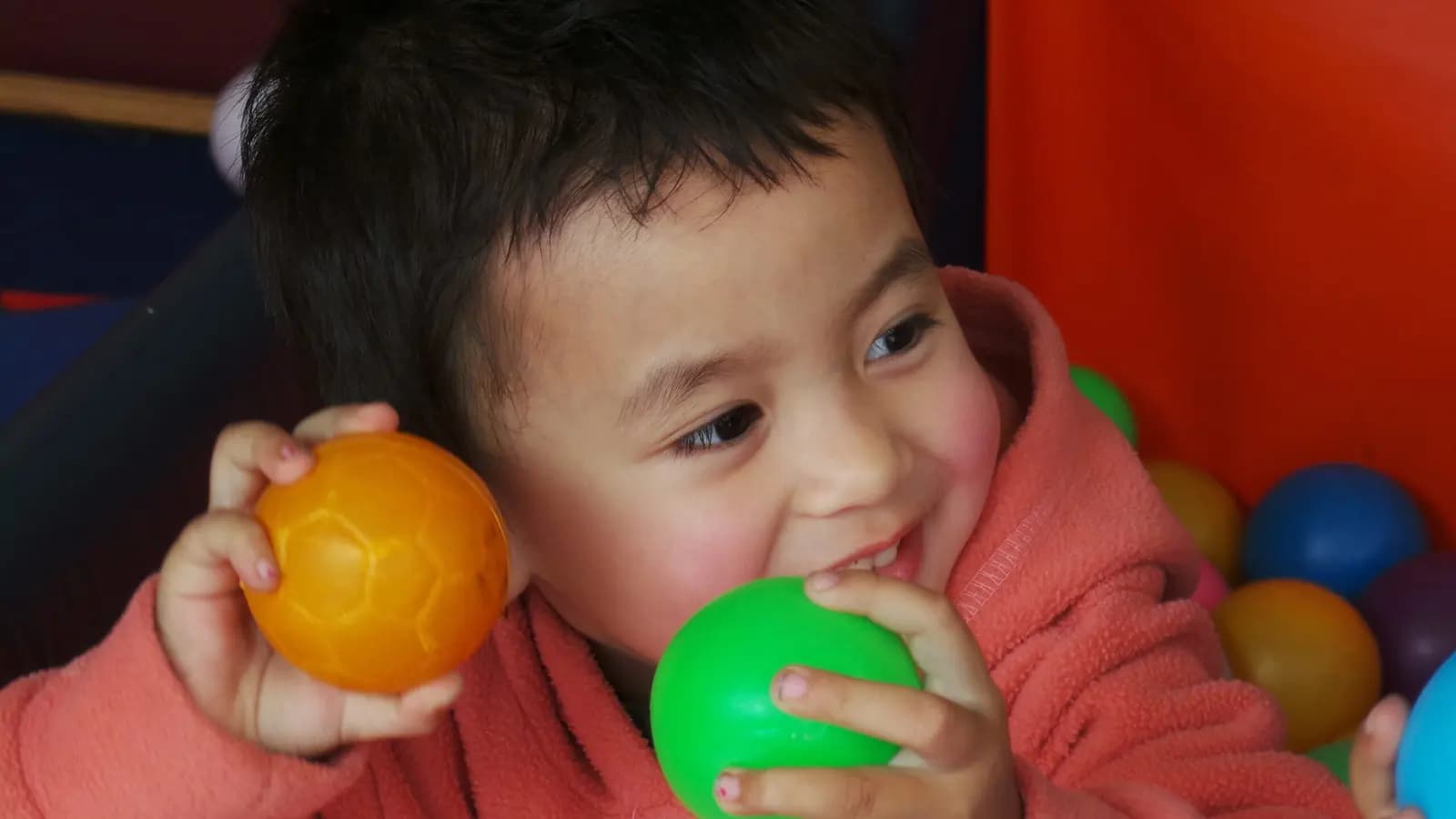
A child absorbed in hands-on work
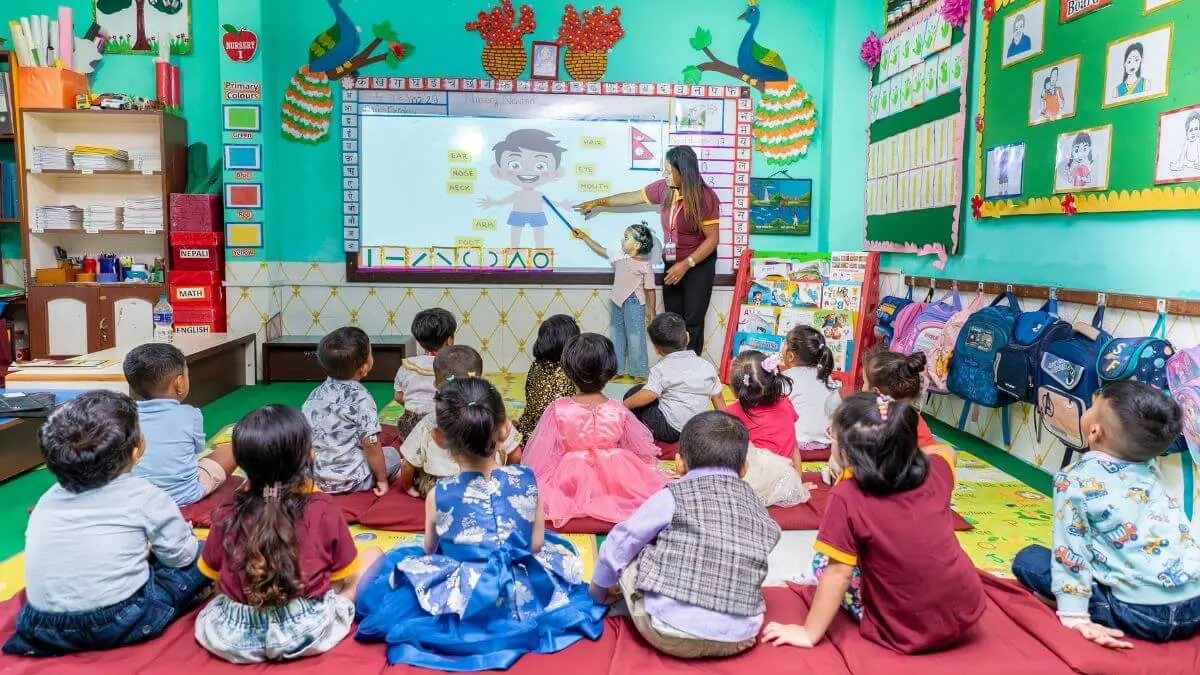
A class learning in the garden
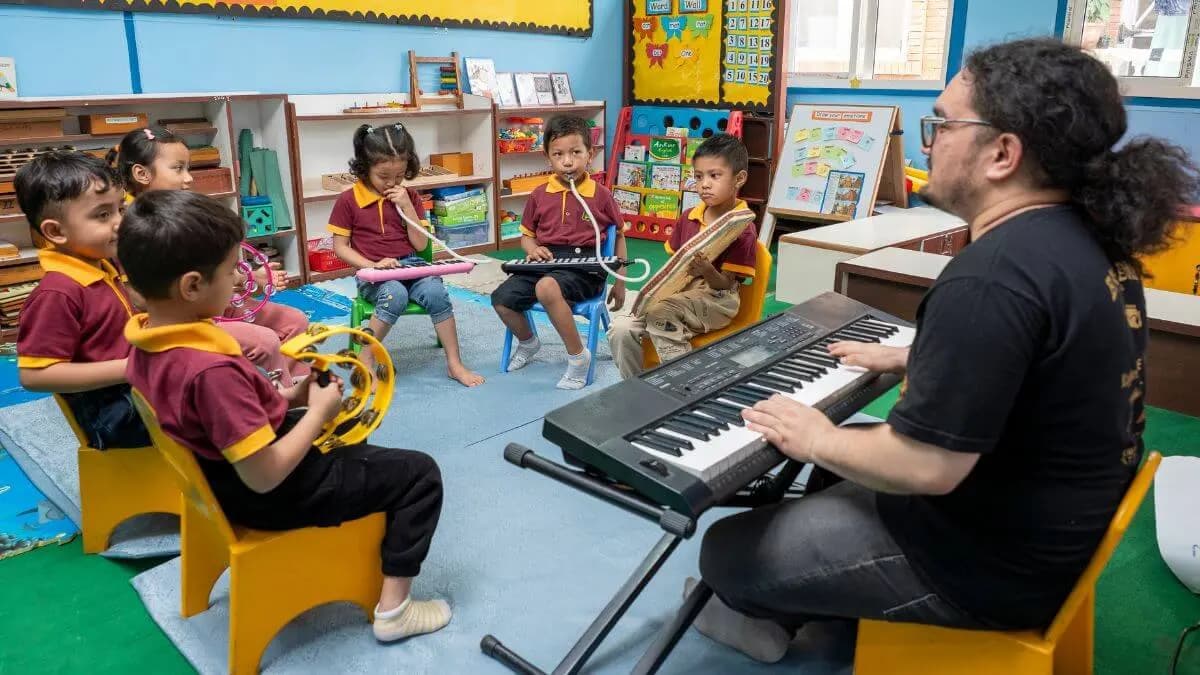
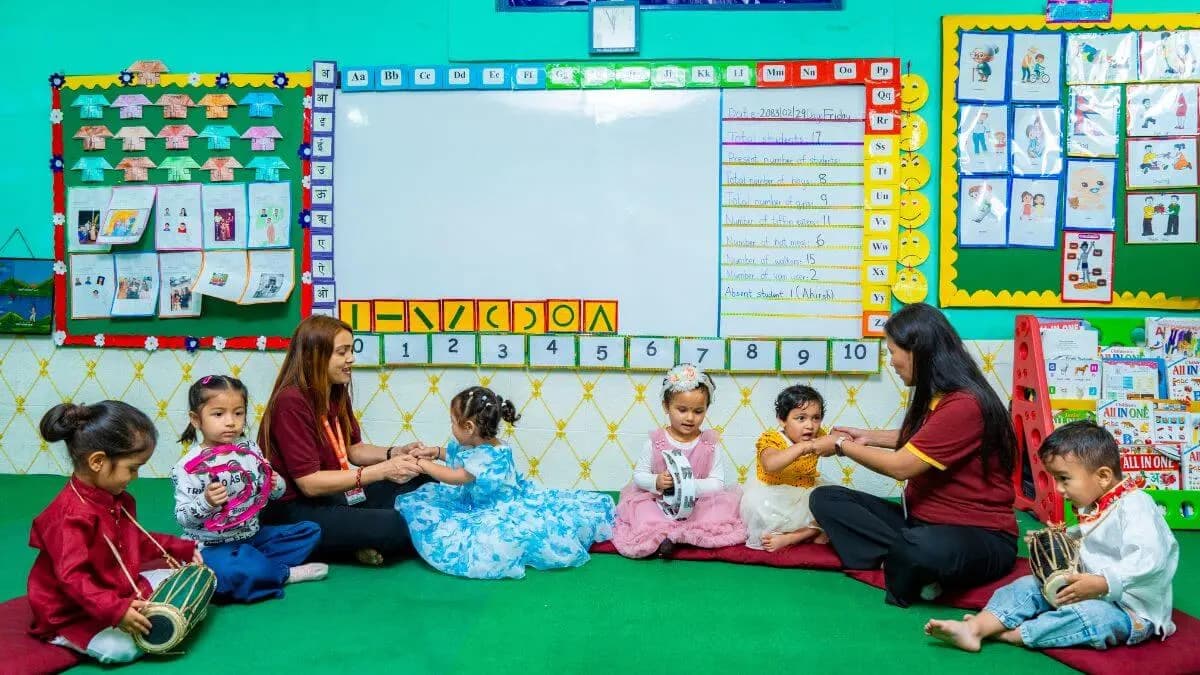
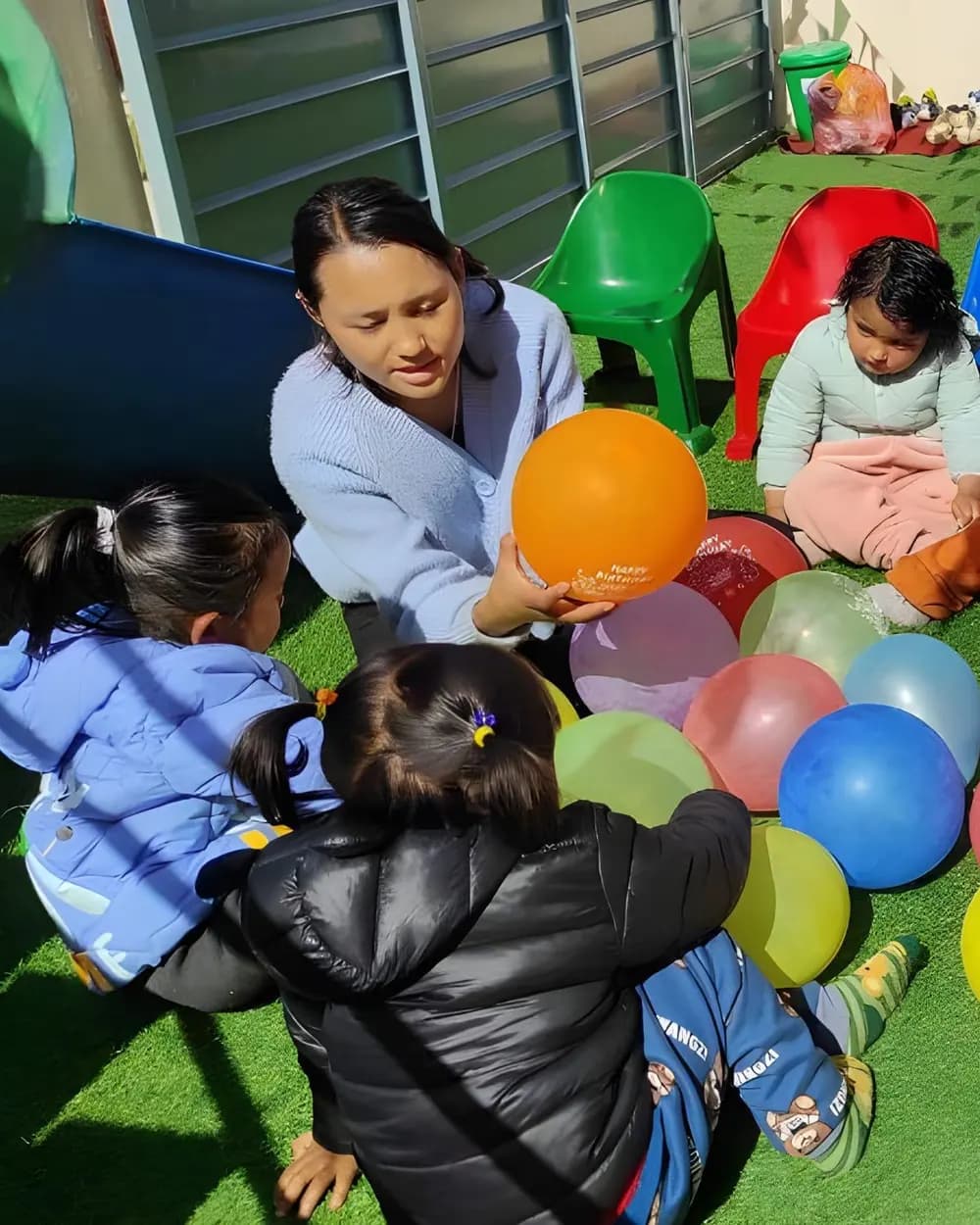
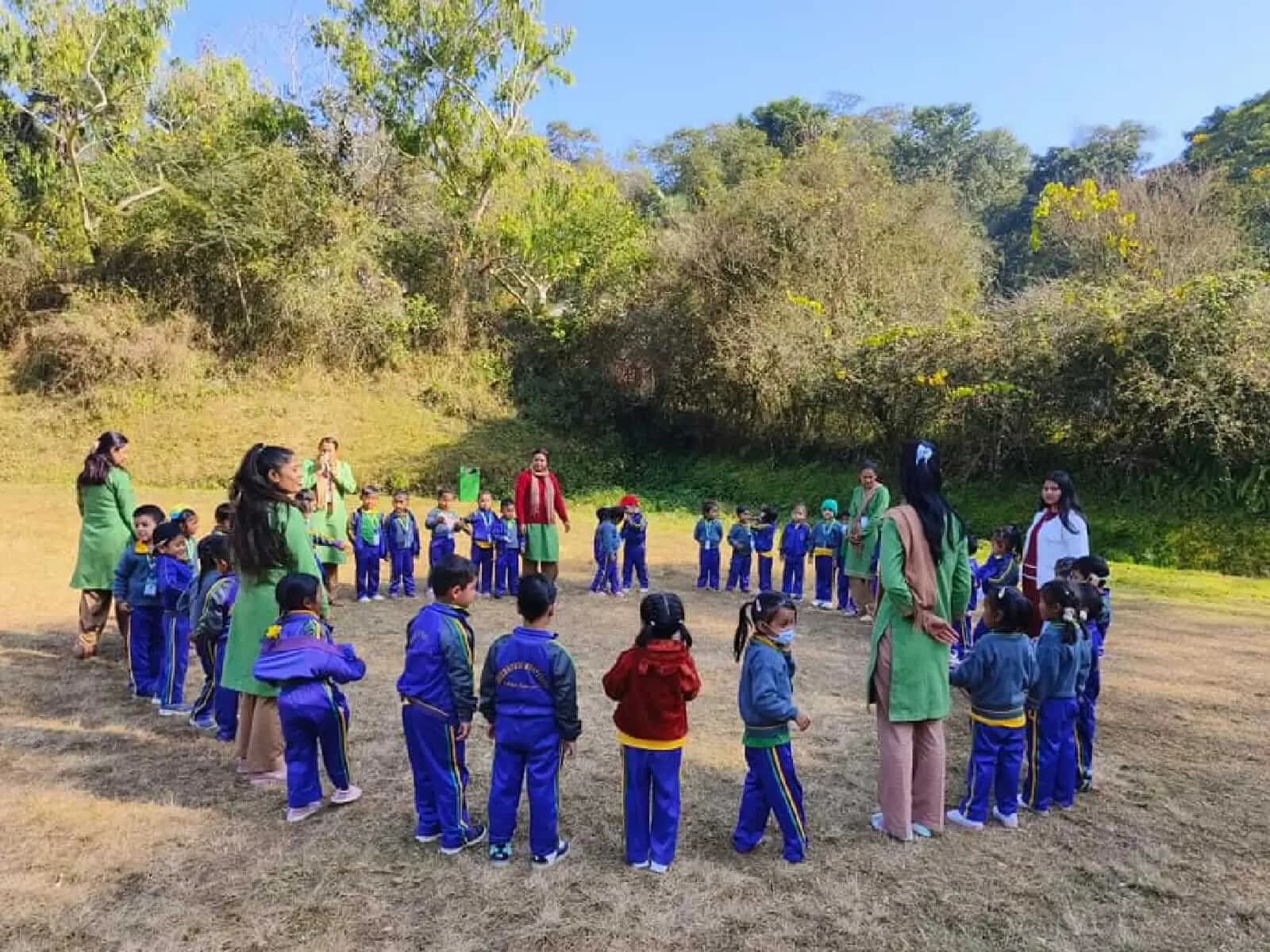
Children together in a circle
Welcome

A note from our founder

We don’t hurry children. We prepare the room, and let them surprise us.

Namaste, and welcome. Choosing a first school is one of the biggest small decisions a family makes — you are trusting us with the years in which your child learns the most, and the fastest.

At Mera, teachers watch before they teach. We show a child a material once, clearly, then step back — so they pour, sort, count and read because they want to, not because a bell told them to.

They leave us confident, kind and ready for big school. The best way to see how is on a school morning — my door, and every classroom door, is open.
Rachana PrajapatiFounder & Head of School
Programmes

A class for every stage, from first steps to first letters

Four classes from 18 months to 6 years, and day care until five for working parents. Hours, ratios and fees are published — you should not have to ask.

Which class fits my child?

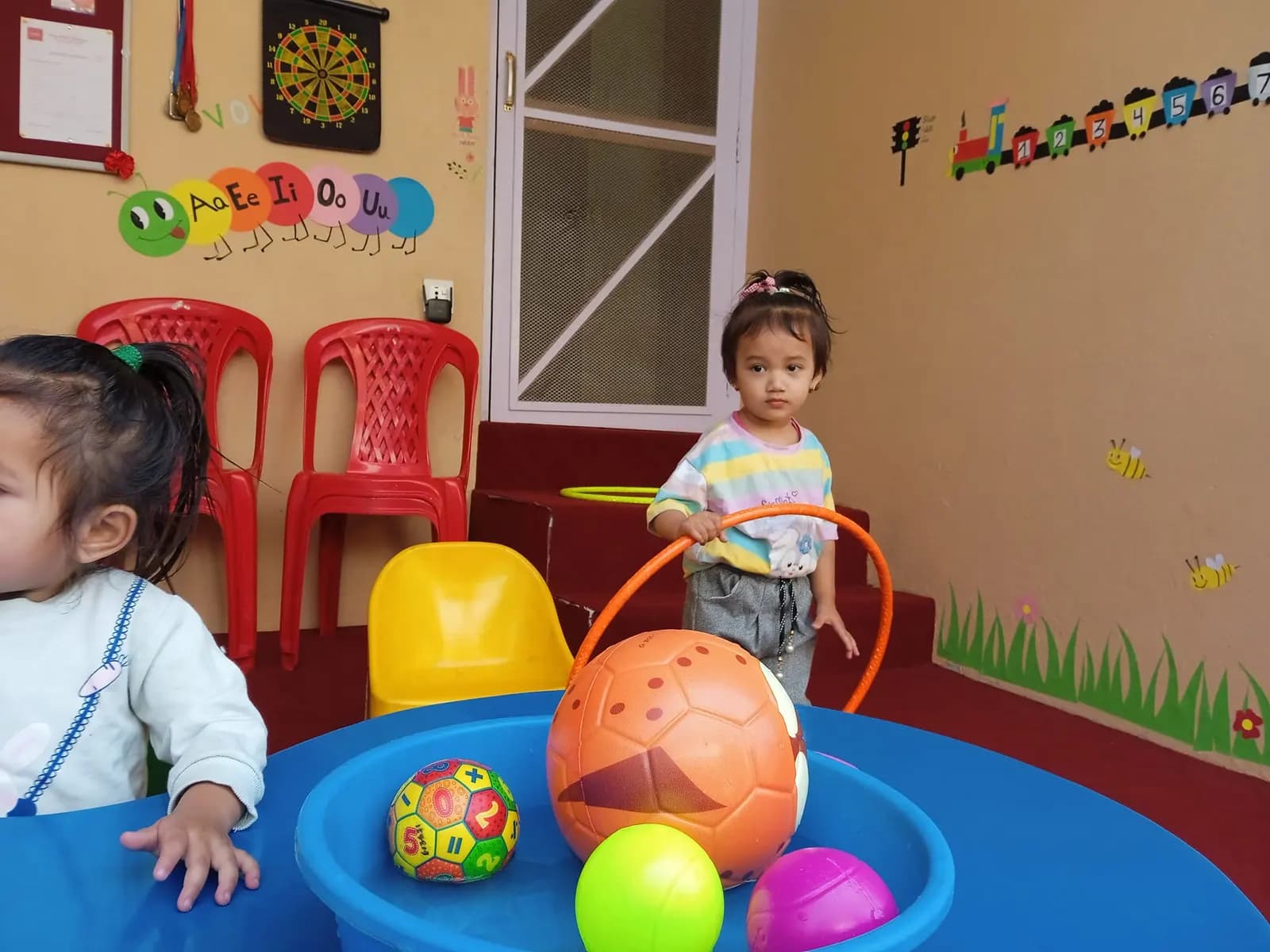
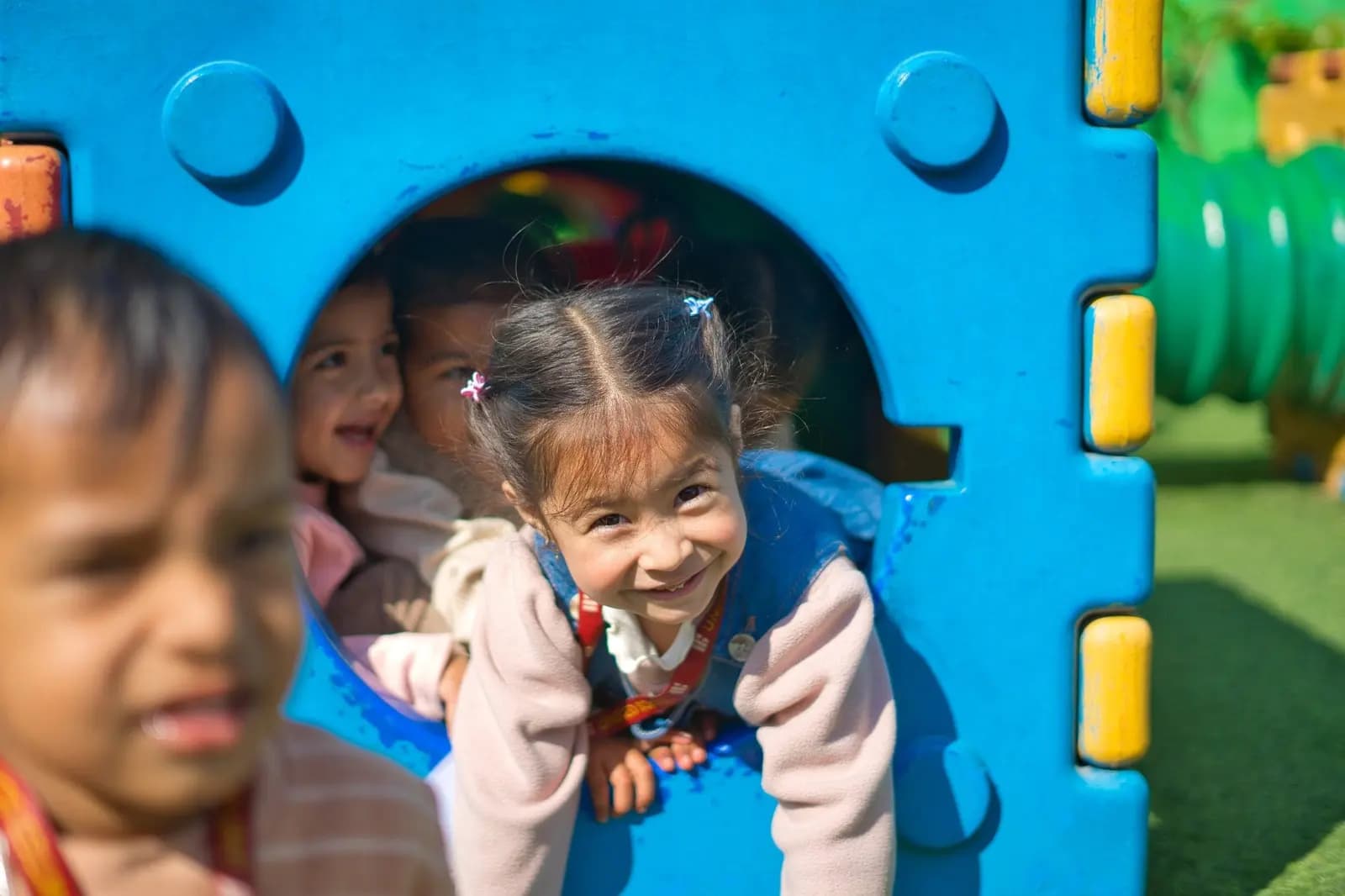
Playgroup children on the slide
18 months – 2½ years

Playgroup

A gentle first step away from home. Short mornings of songs, water pouring, stacking and garden play, with a teacher who knows every child’s routine — naps, nappies and all.

Hours
9:15 AM – 12:30 PM
Days
Sunday – Friday
Ratio
1 : 5
Fee
Rs. 9,500 / month
  • Short, gentle mornings
  • Toilet-training support
  • Settling in with a parent
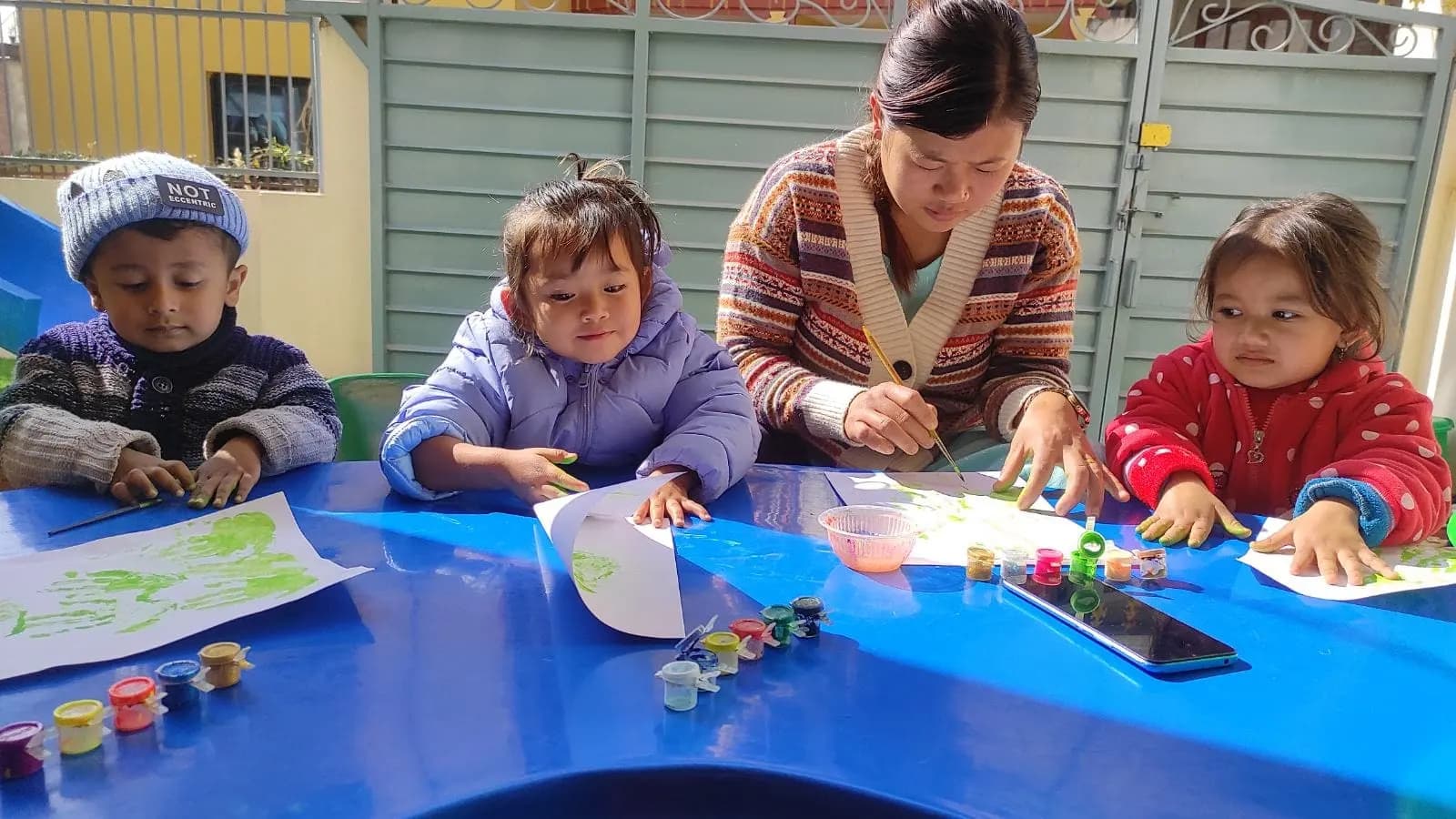
Nursery children making handprint art
2½ – 3½ years

Nursery

The first full Montessori classroom: pouring, spooning and buttoning, the first sensorial materials, a rest after lunch, and songs and stories in English and Nepali.

Hours
9:15 AM – 3:00 PM
Days
Sunday – Friday
Ratio
1 : 6
Fee
Rs. 11,000 / month
  • Practical life and sensorial work
  • Rest time after lunch
  • Songs and stories in two languages
LKG children at a group table
3½ – 4½ years

LKG

Sandpaper letters, first sounds and the golden beads. Children choose their own work from the shelves and stay with it as long as it holds them.

Hours
9:15 AM – 3:00 PM
Days
Sunday – Friday
Ratio
1 : 8
Fee
Rs. 12,000 / month
  • Phonics with sandpaper letters
  • Counting to 100 on the bead chains
  • Nepali letters — अ for अनार
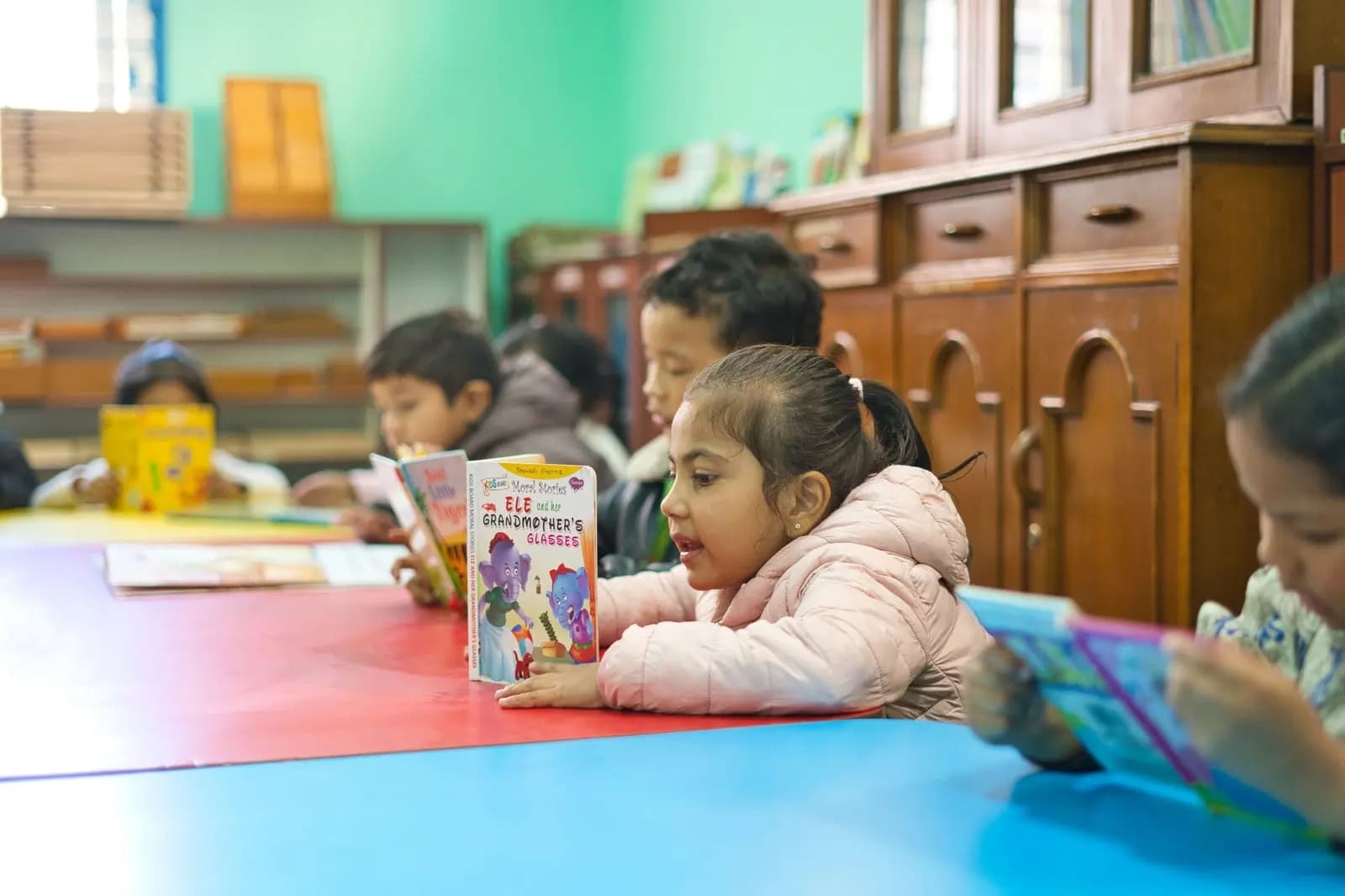
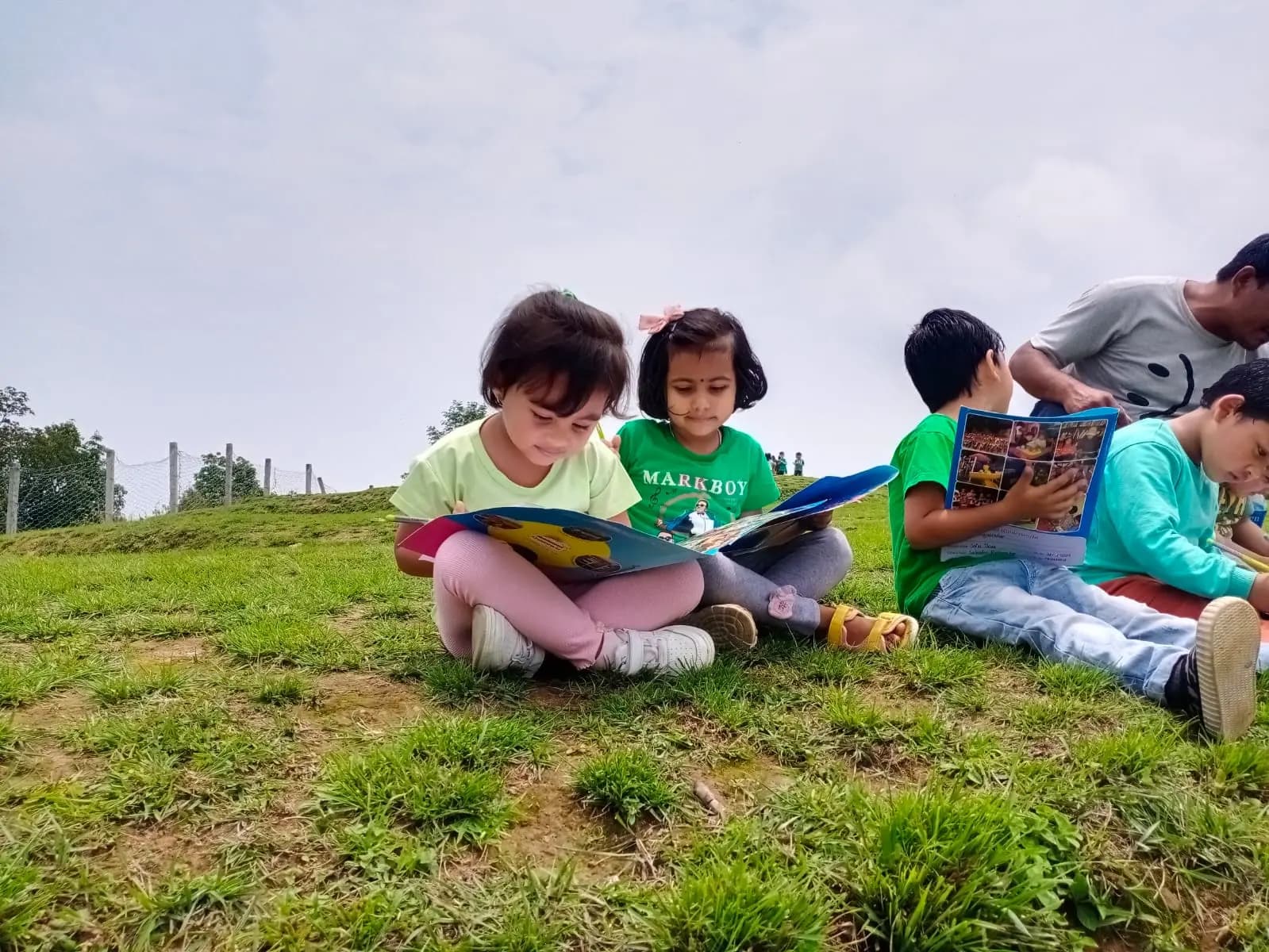
UKG children reading together
4½ – 6 years

UKG

The oldest in the room, and proud of it: reading, writing, early addition and subtraction, and helping the younger ones. By the end of UKG they are ready for Grade 1 anywhere.

Hours
9:15 AM – 3:00 PM
Days
Sunday – Friday
Ratio
1 : 10
Fee
Rs. 12,000 / month
  • Reading and writing in English and Nepali
  • Place value with the golden beads
  • A Grade 1 readiness report
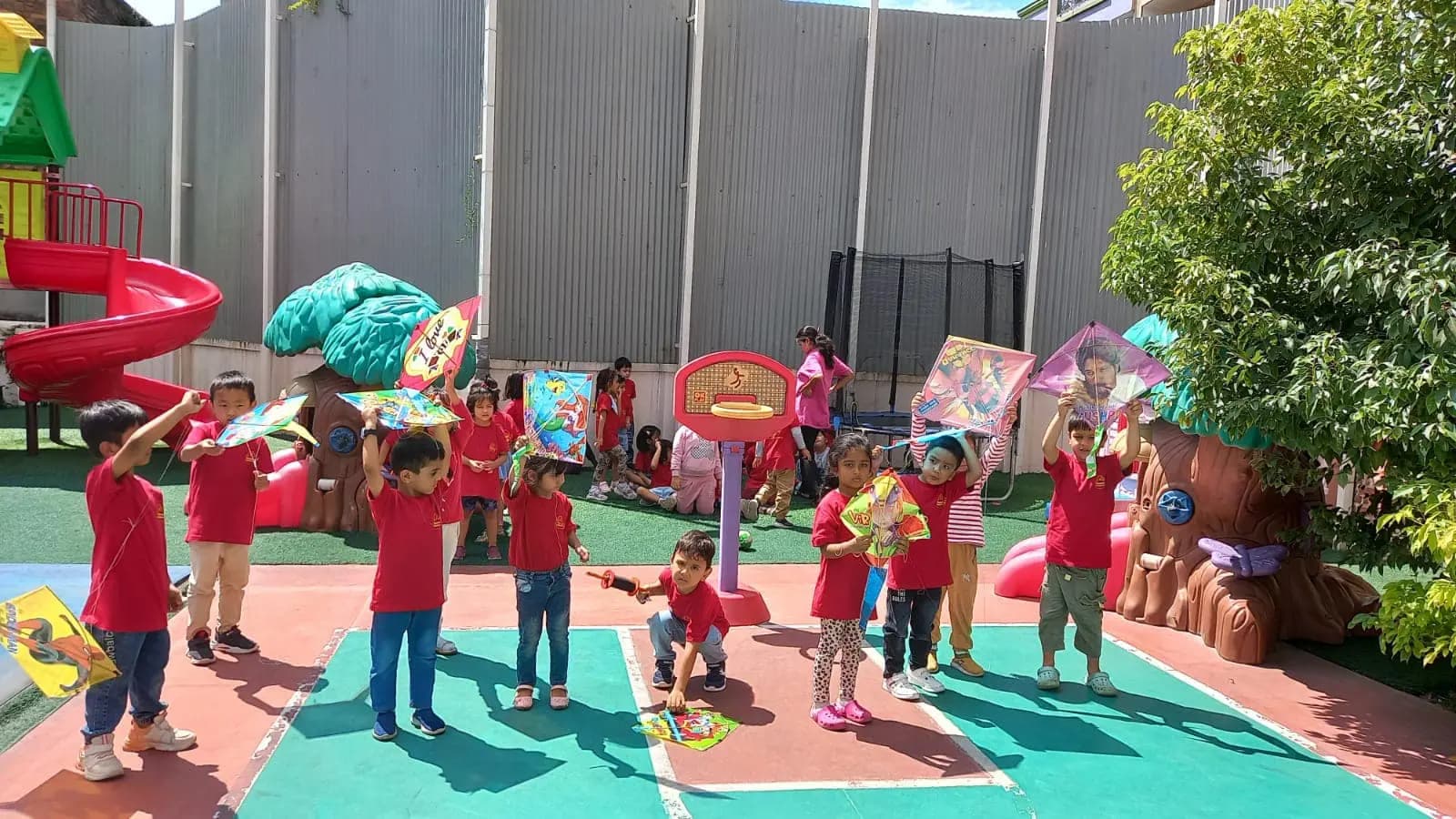
Children playing in the garden after class
18 months – 6 years

Day care

For working parents: after class, children stay with our own teachers for a rest, a snack, stories and garden play until pick-up at five.

Hours
8:30 AM drop-off · until 5:00 PM
Days
Sunday – Friday
Ratio
1 : 6
Fee
Rs. 3,000 / month
  • Afternoon snack included
  • Early drop-off from 8:30 AM
  • Our own teachers, not a sitter
Our approach

Help me to do it myself

Dr Maria Montessori opened her first Casa dei Bambini in Rome in 1907. More than a century on, the idea holds: children learn best by doing, in a room made for them, at their own pace.

A child concentrating on a hands-on activity
Never help a child with a task at which he feels he can succeed.
Dr Maria Montessori

Follow the child

We watch what each child is drawn to and prepare the next step before they reach for it. No two children in the room are doing the same thing at once — and that is the point.

Learning through the hands

Pouring, buttoning, tracing sandpaper letters. Every material is real, child-sized and made to be handled, because young children think with their hands.

A prepared environment

Low shelves, real glass and a place for everything. The room does half the teaching: children always know where the work is, and where it goes back.

Freedom within limits

Children choose their work and how long to stay with it, inside a few clear rules — we walk, we use quiet voices, we put things back. Independence and kindness grow together.

In the classroom

Five areas, one prepared room

Every Montessori classroom is arranged in the same five areas, so a child always knows where to find the next thing to master.

Practical life

Pouring water, sweeping, buttoning, folding a napkin, watering the tulsi. Everyday tasks that build concentration, a steady hand and the pride of “I did it myself.”

  • Pouring and spooning
  • Buttoning frames
  • Polishing brass
  • Flower arranging
  • Slicing a banana

Sensorial

The Pink Tower, the Brown Stair, colour tablets and sound cylinders sharpen each sense — and give children words for what they notice: bigger, rougher, louder, the same.

  • Pink Tower
  • Brown Stair
  • Knobbed cylinders
  • Colour tablets
  • Sound cylinders

Language

Children trace sandpaper letters with two fingers while saying the sound, then build words with the moveable alphabet — often before they can hold a pencil. In Nepali too: अ for अनार, क for कमल.

  • Sandpaper letters
  • Moveable alphabet
  • Metal insets
  • Object boxes
  • वर्णमाला cards

Mathematics

Quantity first, symbol second. A child holds “ten” as a bar of ten beads before writing it, and carries a thousand-cube across the room before meeting the word.

  • Number rods
  • Spindle boxes
  • Golden beads
  • Teen and ten boards
  • Hundred chain

Culture and nature

The world, starting from Nepal: puzzle maps, the seasons and our festivals, seeds in the garden and the life cycle of a butterfly. Art and music live here too.

  • Puzzle maps
  • Land and water forms
  • Seed planting
  • Madal and songs
  • Festival crafts
Beyond the shelves

Music, mud and a trip to the fire station

Woven into the week for every child — no extra classes to sign up for.

  • Children playing melodicas with their teacher

    Music and rhymes

    Nepali and English songs, the madal, and melodicas round the keyboard.

    Every dayAll classes
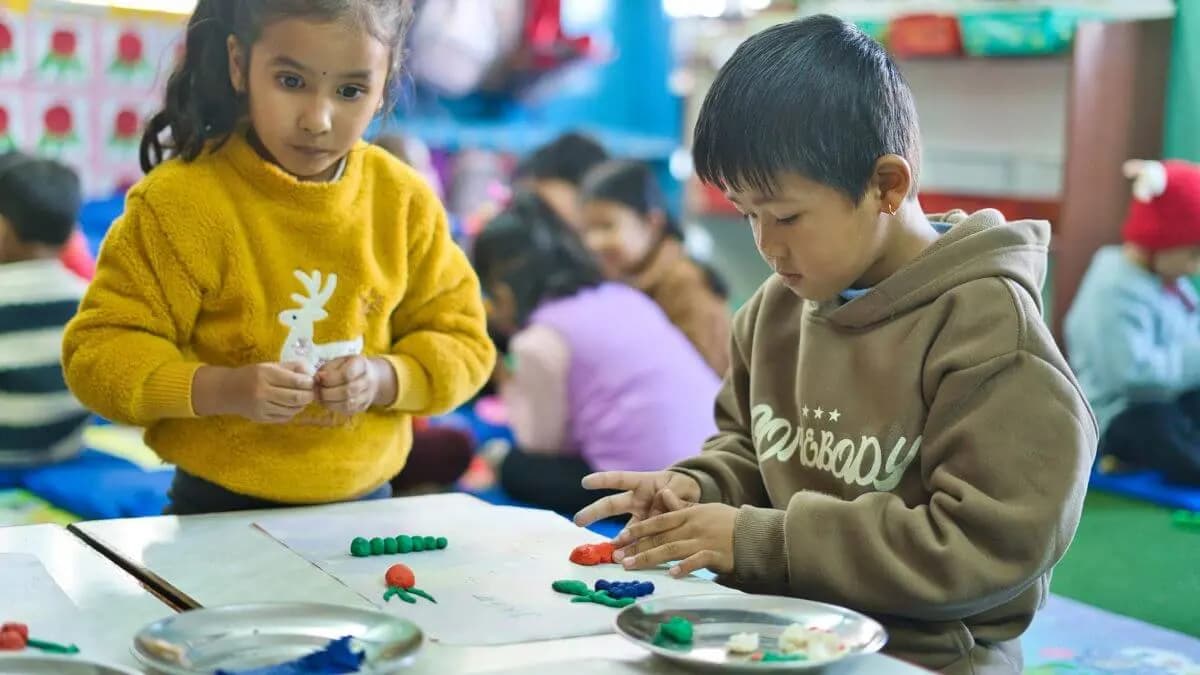
  • Two children shaping clay

    Art and clay

    Painting, clay and leaf prints at easels the children set out and clean up themselves.

    Sunday and WednesdayNursery – UKG
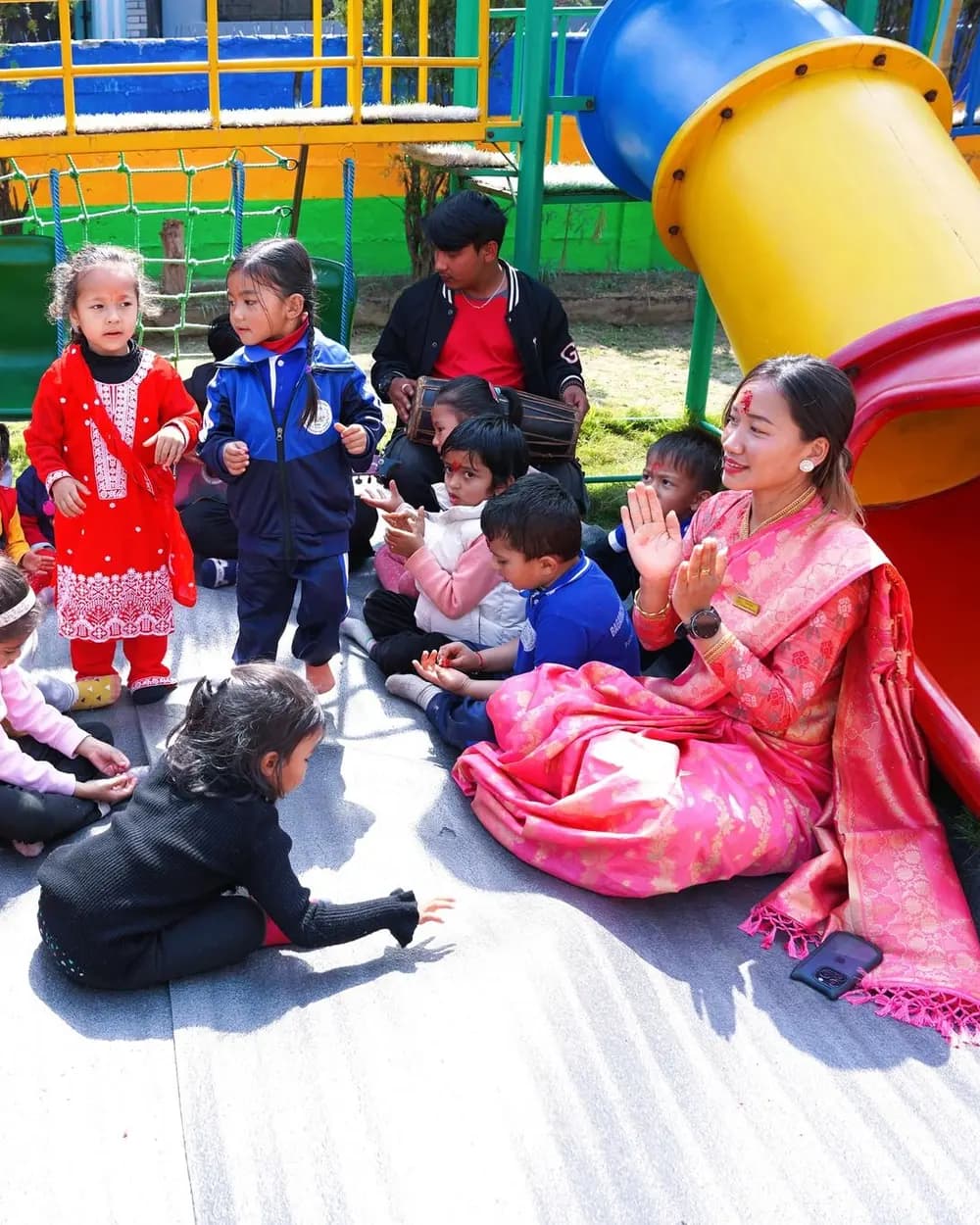
  • A teacher clapping along with toddlers

    Dance and movement

    Action songs, a little yoga and Nepali folk dance — good for balance, and for the wriggles.

    Monday and ThursdayAll classes
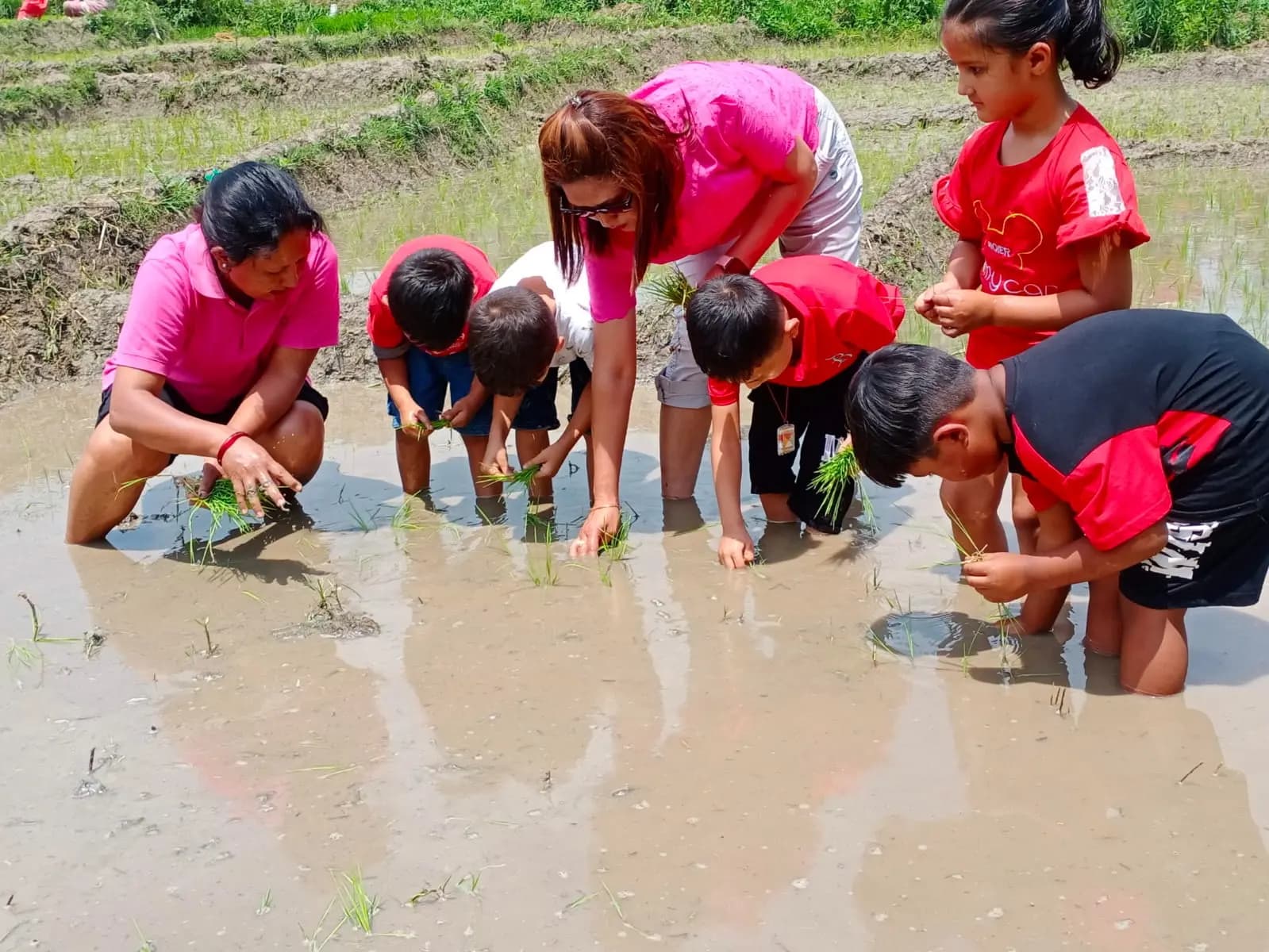
  • Children planting rice seedlings

    Gardening

    Sowing, watering and picking in our vegetable beds — and Ropain at a real paddy every Asar.

    Every TuesdayLKG and UKG
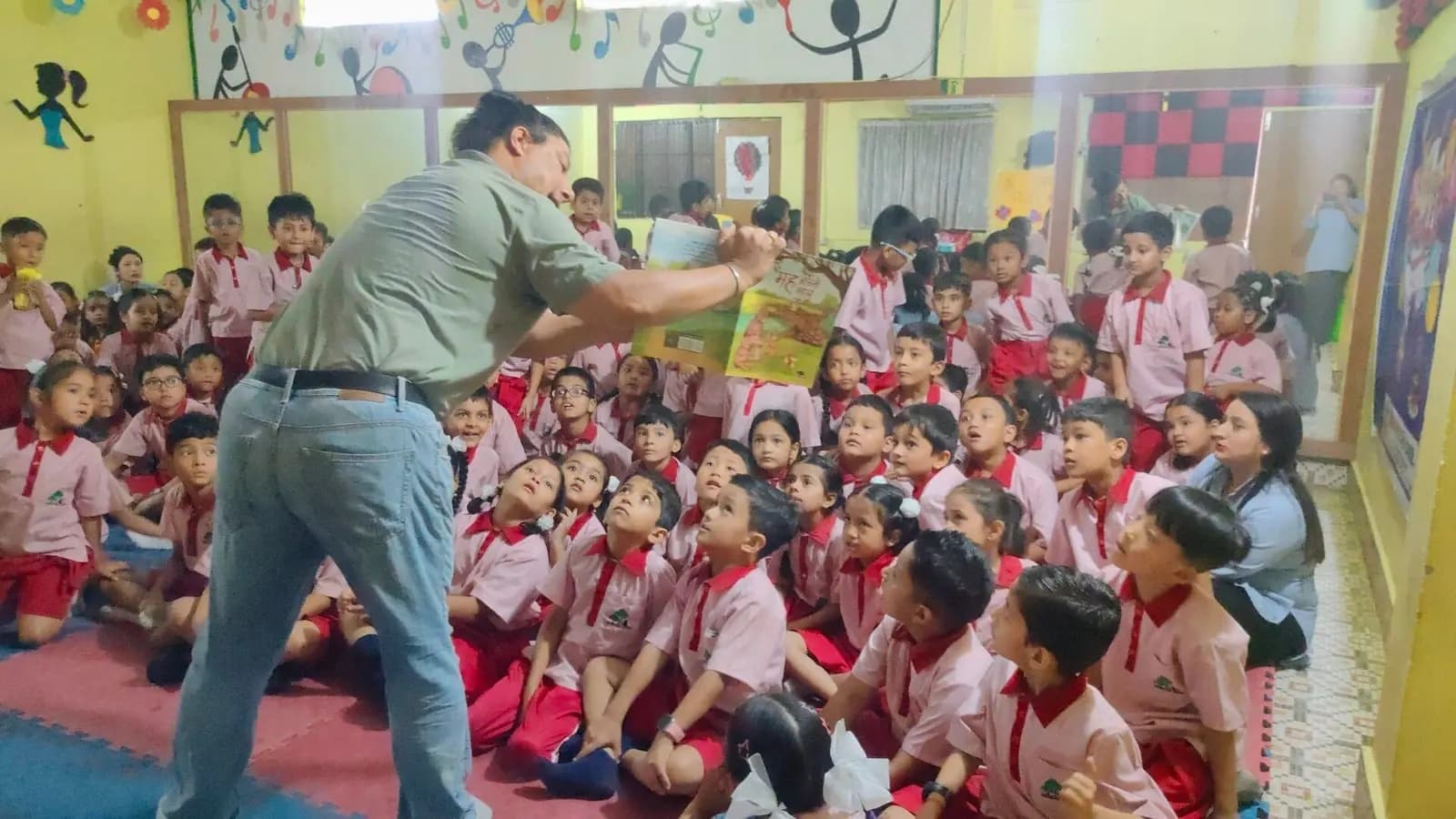
  • A teacher holding up a picture book

    Stories and puppets

    Picture books, a puppet show, and a Nepali story to take home every Friday.

    Every FridayAll classes
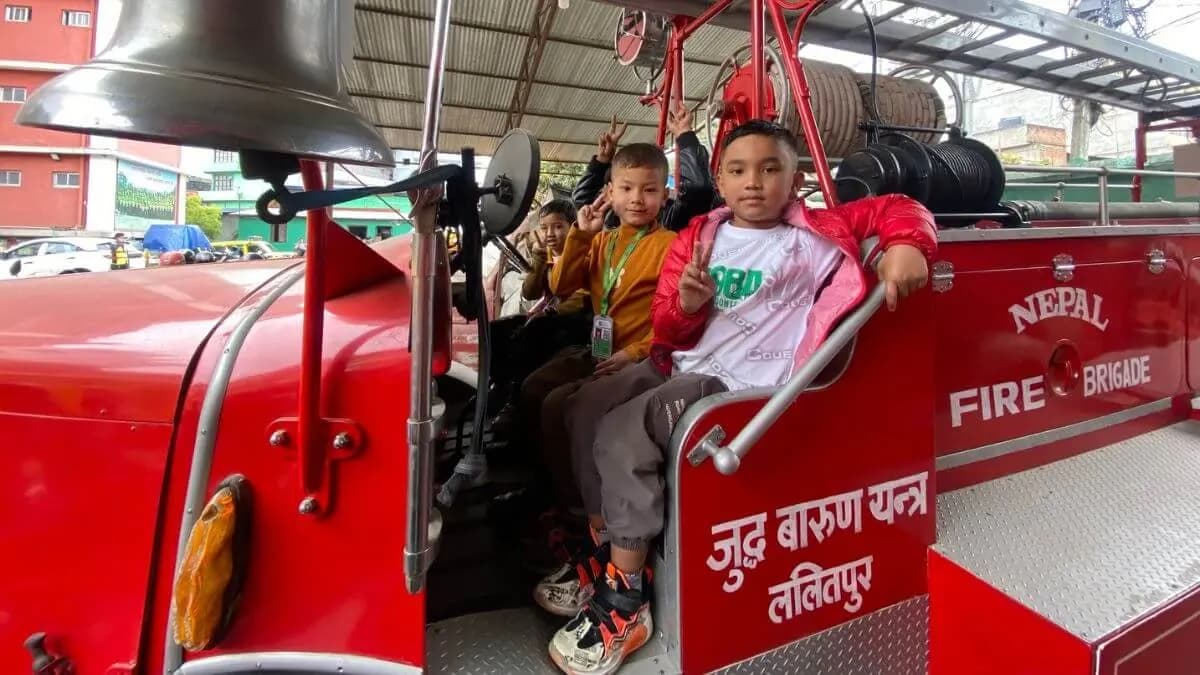
  • Children in the cab of a fire engine

    Field trips

    The fire station, the post office, a farm — the town is a classroom too.

    Once a termLKG and UKG
A day with us

A day at Mera

A calm day with a rhythm children can feel. Younger and older children follow different days, so pick a tab.

  1. 9:15

    Hello at the door

    Shoes off, bag on the hook, a hug goodbye. Your child lets go of your hand when they are ready — we never rush it.

  2. 9:30

    Morning circle

    A song, a greeting in English and Nepali, and who is here today.

  3. 9:45

    Work time

    Pouring, stacking, threading and puzzles, with a teacher sitting close by.

  4. 11:00

    Fruit and garden play

    Seasonal fruit, then sand, water and the slide in our garden.

  5. 12:00

    Lunch together

    A hot, home-cooked meal at small tables. Playgroup goes home at 12:30.

  6. 1:00

    Rest, stories and songs

    Nursery children nap or rest, then stories and music until home time at 3:00.

Times are a guide, not a bell. Early drop-off from 8:30 AM; day care until 5:00 PM.

Small on purpose

The numbers parents ask about first

Published, because a preschool asking for your child should be willing to be measured.

2071

Opened in Suryabinayak

Twelve years of first days

1 : 6

Teacher-to-child ratio for under-threes

Never above 1 : 10

100%

Lead teachers Montessori-trained

NMTC certified

18

Children in a class, at most

With two adults in every room

Our spaces

A school built for small people

Everything at a child’s height — shelves, sinks, coat hooks — so children can do things for themselves, safely.

  • A child at the low classroom shelves

    Five sunny classrooms

    Low open shelves, child-sized tables and big windows, with every material within a small child’s reach.

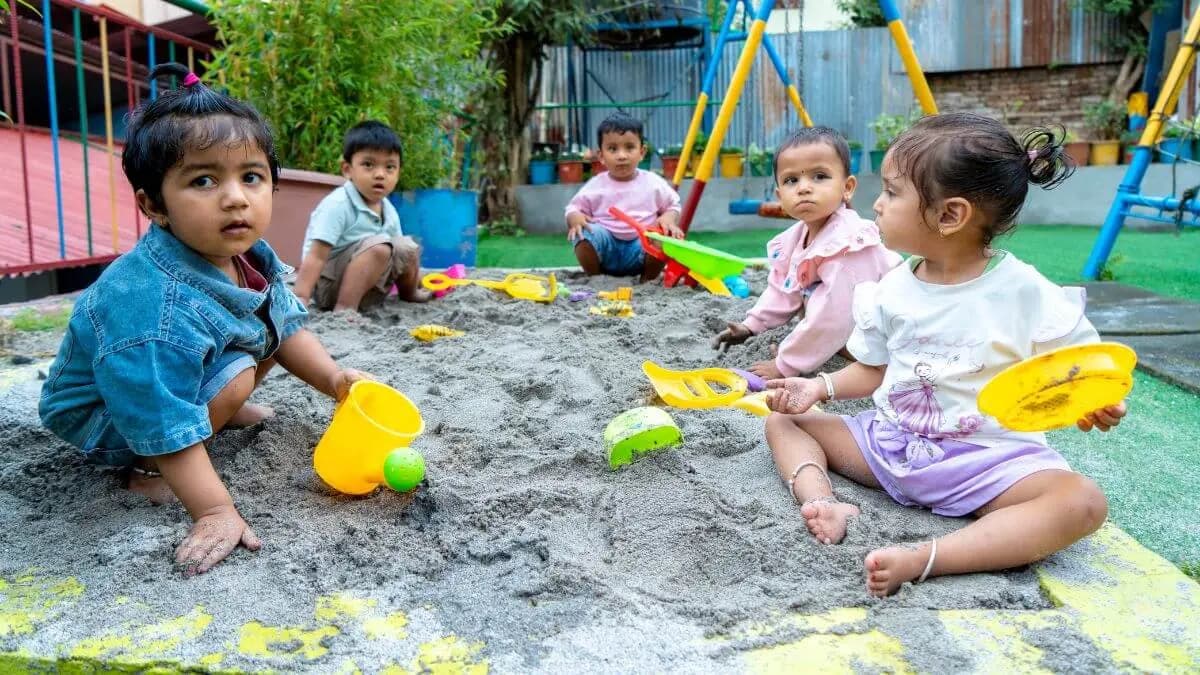
  • Children digging in the sand pit

    A garden and sand pit

    Fenced on every side, with a sand pit and vegetable beds the children water themselves.

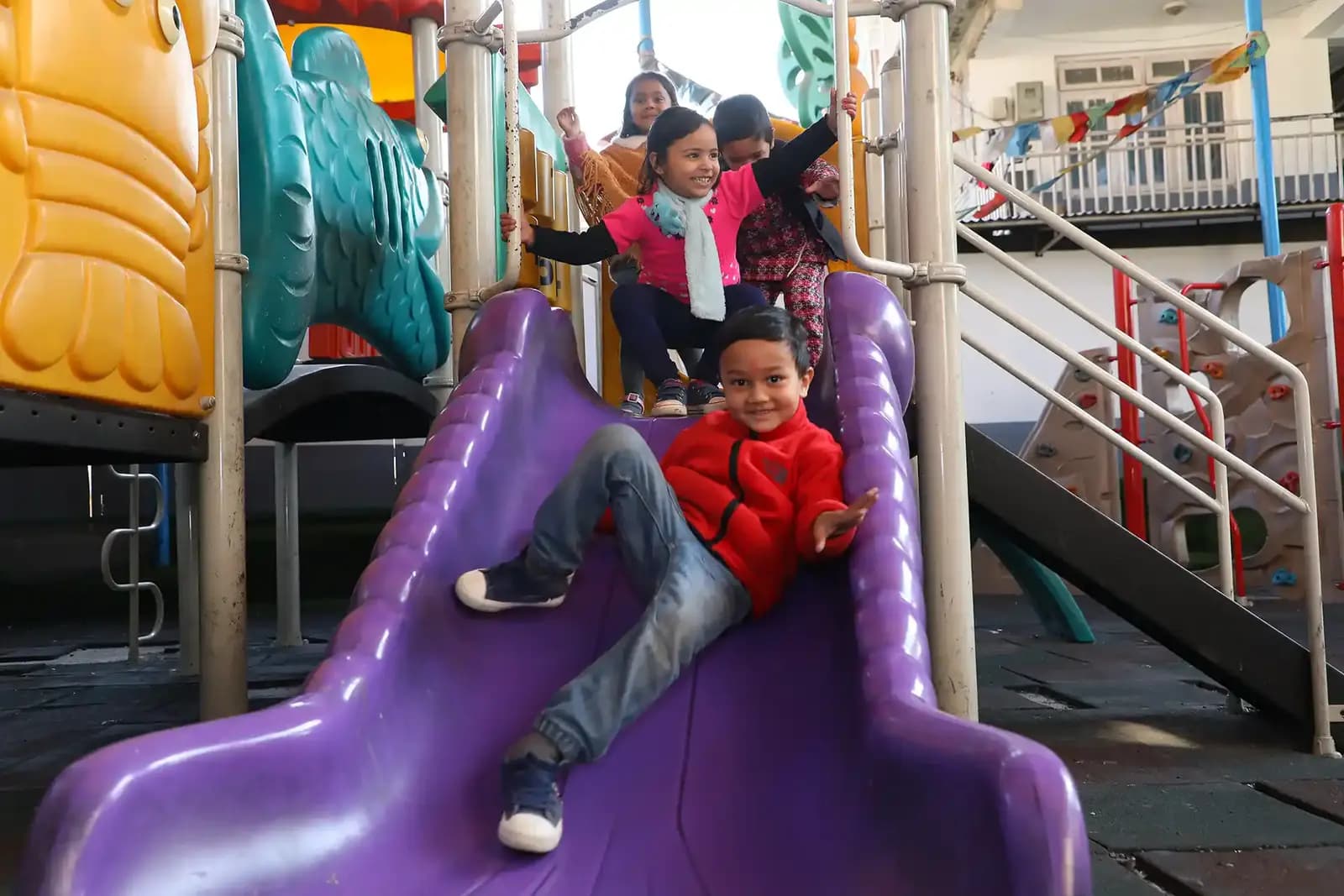
  • A child coming down the playground slide

    Slides and a climbing frame

    A soft-floored play area for climbing, sliding and taking turns.

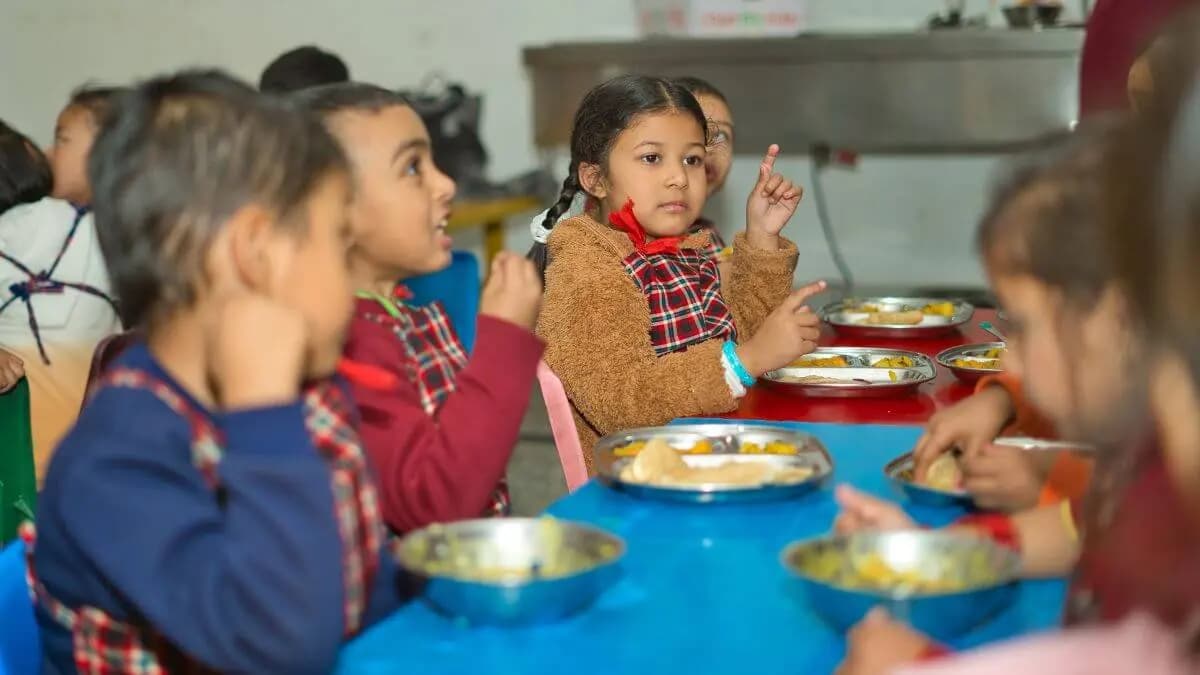
  • Children eating lunch at a low table

    Our own kitchen

    Lunch and snacks cooked fresh every morning, and eaten together at low tables.

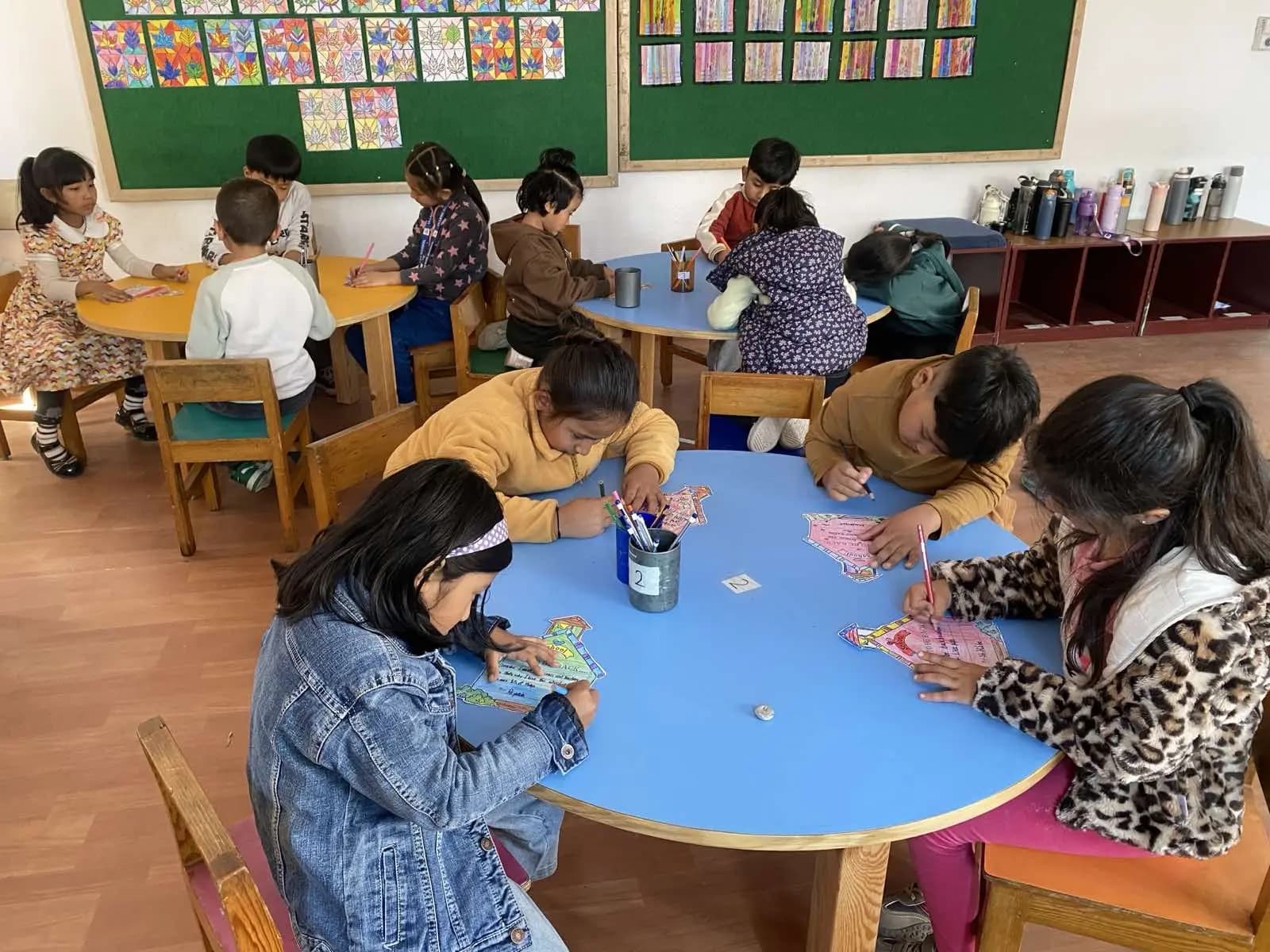
  • Children at round tables beside the bookshelves

    A reading and activity room

    Picture books on open shelves and round tables for puzzles, painting and quiet work.

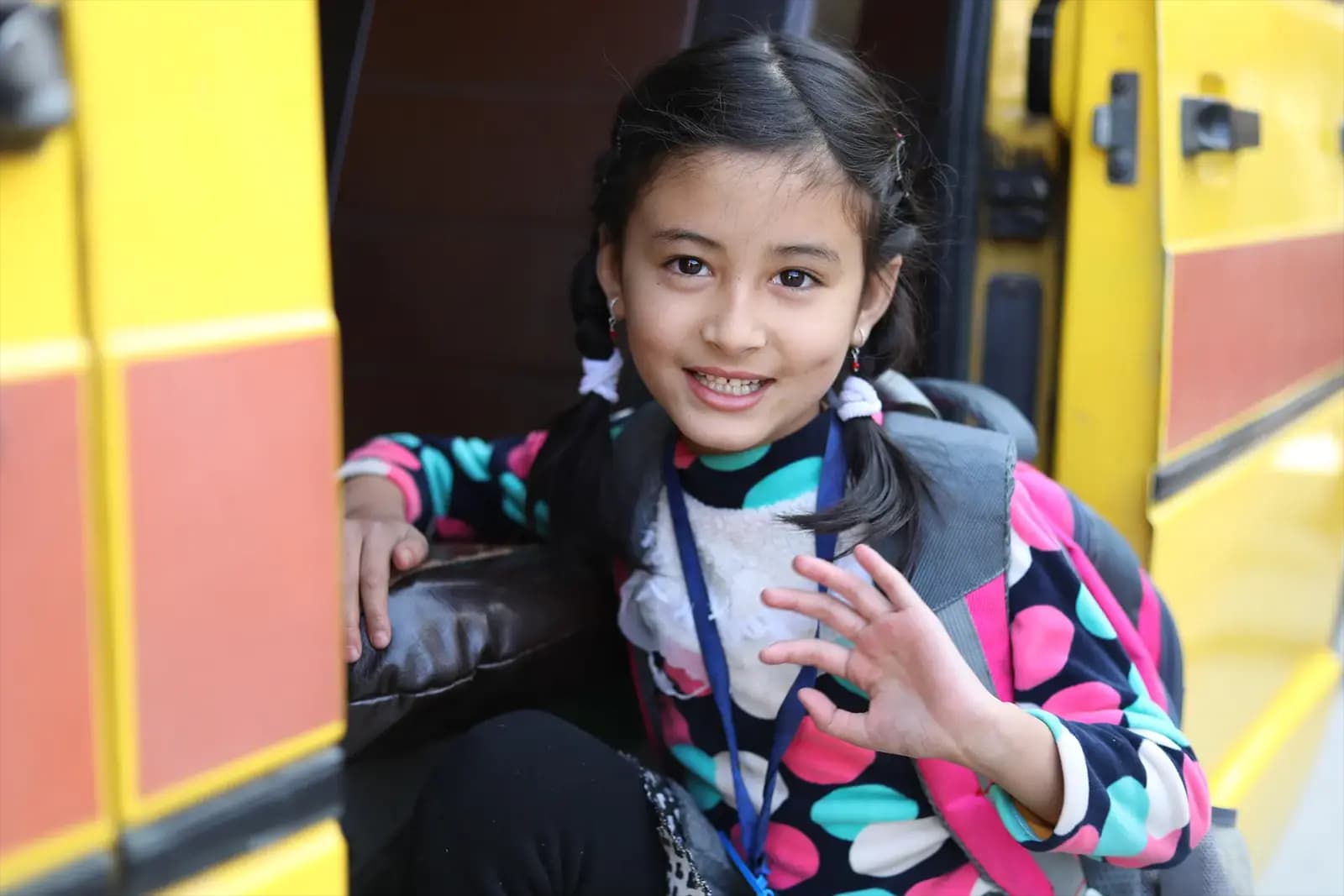
  • A child waving from the school van door

    School van

    Door to door within 4 km, with a didi on board every trip.

  • A quiet rest room

    Cots, clean sheets and low light for Playgroup and day-care naps.

  • Filtered drinking water

    Boiled and filtered, from a tap low enough to refill their own bottles.

  • An earthquake-safe building

    Built to code after 2072, with a drill every term.

Look around

Step inside a classroom

Tap a number to see what happens in each corner. Better still, come and see it on a school morning.

A Montessori classroom with low shelves

Folders, crayons and trays at a child’s own height — they take what they need and put it back.

Care and safety

Safe, clean, and known by name

What every parent asks first, answered before you have to ask.

CCTV in every room

Cameras in every classroom and the garden, recorded for thirty days. Ask at the office and we will show you your child’s room live.

Safe pick-up

Children go home only with the adults on their pick-up card. Someone new collecting? Call us first, and they bring ID.

First aid and a sick bay

Teachers trained in paediatric first aid, a quiet sick bay, and a call to you within minutes if your child is unwell.

Clean, every day

Toilets cleaned after every break, toys washed weekly, and hands washed before every meal — at sinks low enough to do it themselves.

One gate, always staffed

Visitors signed in, the gate staffed from 8:30 to 5:00, and the garden fenced on every side.

Gentle personal care

Toileting help and nappy changes by our didis — women caregivers trained for the youngest children — always with the door ajar.

A teacher playing with toddlers
Our teachers

The teachers your child will know by name

Every lead teacher is Montessori-trained, and every room has a second adult.

  • Anita Duwal

    Lead teacher, Playgroup · NMTC trained

  • Srijana Basnet

    Lead teacher, Nursery · NMTC trained

  • Pooja Kayastha

    Lead teacher, LKG · NMTC trained

  • Menuka Thapa

    Lead teacher, UKG · B.Ed., NMTC trained

From our parents

What families tell us

In their own words, shared with their permission.

Our daughter cried for three mornings. On the fourth she let go of my hand at the gate and went to water the plants. Now she corrects how I fold the towels at home.
SDSunita DuwalMother of Aarya, Nursery
I work in Kathmandu and get home late. Day care until five, a proper hot lunch, and a photo of his work on the app every afternoon — I stopped worrying in the first week.
BSBikash SuwalFather of Arnav, LKG and day care
He came home and counted the stairs, in English and then in Nepali. Nobody drilled him — he had just been carrying bead bars around all morning.
PSPramila ShresthaMother of Reyansh, UKG
The teacher noticed he was struggling with a crayon before we did, and gave him tongs-and-tweezers work for a month. His hand is steady now. That is the attention we were looking for.
RKRajendra and Nisha KarmacharyaParents of Yuvan, LKG
Through the year

A year of firsts

Nepal’s festivals give our year its shape, and give every child a reason to celebrate with their family at school.

  1. Children on the first day of the session
    Baisakh

    A new session

    Marigold garlands, a tika from the teachers and a gentle first week, with parents welcome to stay for the first mornings.

  2. Mothers dancing for Teej
    Bhadra

    Teej and Children’s Day

    Mothers in red dancing in the courtyard for Teej — and on Bhadra 29, a Children’s Day party planned entirely around the children.

  3. A Dashain celebration at school
    Ashwin · Kartik

    Dashain and Tihar

    Jamara the children sow themselves, paper kites and tika before the holidays — then rangoli at the gate and a gentle round of deusi-bhailo.

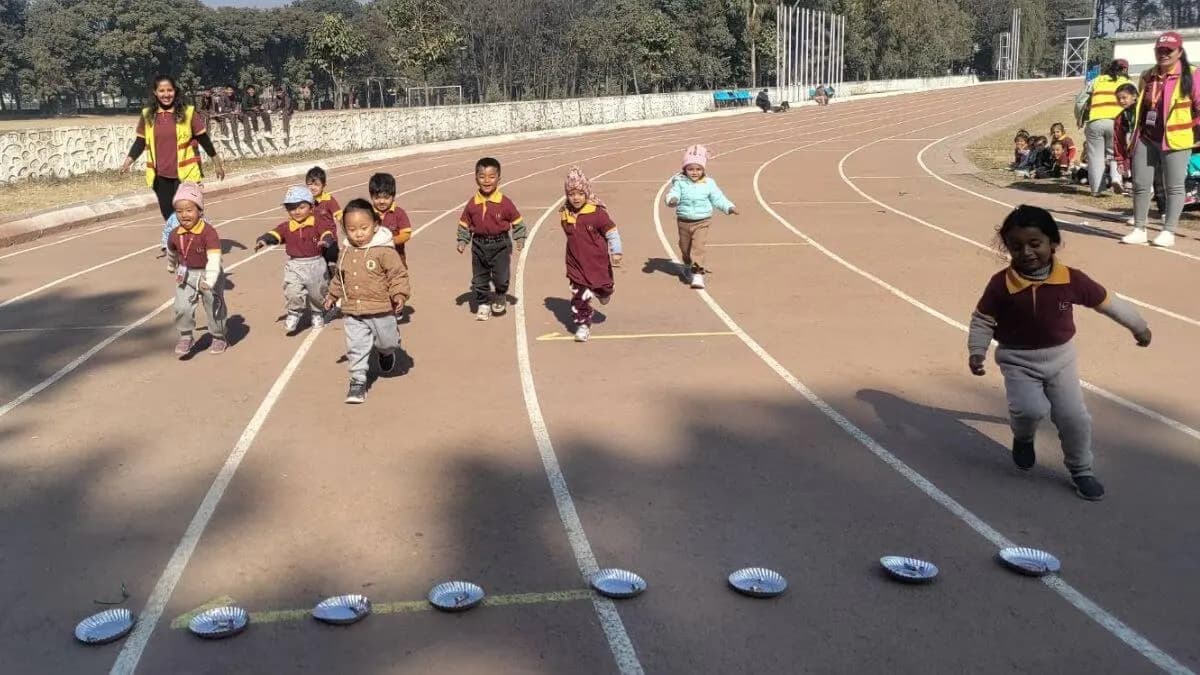
  4. Children playing on Sports Day
    Mangsir

    Sports Day

    Frog jumps, sack races and an egg-and-spoon final, with a medal for every child and the parents’ tug-of-war to finish.

  5. Children writing their first letters
    Magh

    Saraswati Puja

    Yellow clothes, a small puja, and the youngest children writing their first अ in a tray of rice.

  6. UKG graduation day
    Chaitra

    Graduation and Parents’ Day

    UKG in caps and gowns, a song from every class, and a warm farewell for the children moving on to Grade 1.

Before you visit

Questions parents ask us

Ask us something else
From 18 months to 6 years: Playgroup (18 months – 2½), Nursery (2½ – 3½), LKG (3½ – 4½) and UKG (4½ – 6). Day care is open to every age until 5:00 PM.
School visits

Come and see a Mera morning

Visits Sunday to Friday, 10:00 – 11:30 AM. Bring your child — most children do not want to leave.

Prefer to write first? +977 1 661 2071 · [email protected]